Writing a novel is a seven-step process: find an idea with conflict, decide how much to plan, build a structure, create characters that change, build the world, write an imperfect first draft, and rewrite until it's polished. It doesn't depend on talent or inspiration, but on a method and the consistency of writing a little every day.
Everyone has a novel inside them. The problem is never the idea: it's getting from "someday I'll write a book" to holding a finished manuscript in your hands. Most people fall by the wayside, not for lack of talent, but for lack of method. And here's the good news, the one that changes everything: writing a novel can be learned. It's a craft with stages, tools, and well-known traps. In this guide you'll walk through the complete process, step by step, from the initial spark to the published book, with the honesty of someone who has seen many authors start… and the experience of knowing what makes the few actually finish.
Can you learn to write a novel?
Yes, and it's best to shed the myth of the inspired genius as soon as possible. Inspiration exists, but it's unreliable: it comes when it wants and leaves without warning. Novelists who finish books don't wait for the muse; they sit down to work. Stephen King summed it up in On Writing with a formula that has no shortcuts: "if you want to be a writer, you must do two things above all others: read a lot and write a lot."
Reading teaches you what works and what doesn't without anyone explaining it; writing turns that knowledge into craft. Talent helps, but it's the least important part of the equation. What truly separates someone who finishes a novel from someone who doesn't is consistency: pages accumulated, day after day. The rest of this guide is the map of those pages.
Step 1: From idea to premise
An idea isn't a story yet. "A novel about artificial intelligence" is a topic, not a plot. For an idea to sustain a novel it needs conflict: someone who wants something and an obstacle in the way. That tension is the engine that keeps the reader turning pages.
The tool to condense it is the premise: one or two sentences that capture the protagonist, their desire, and what's at stake. For example: "A watchmaker who lost his daughter discovers he can turn back time by one minute, but each jump erases a memory of her." In a single line there's already character, desire, price, and dilemma. If you can summarize your novel like this, you have foundations. If you can't, you're still looking for the story, not writing it.
Step 2: To plan or to improvise?
Before writing the first scene there's a decision that shapes the way you work. In the English-speaking world people talk about two tribes: plotters (map authors), who plan the complete structure before starting, and pantsers (compass authors), who discover the story as they write. George R. R. Martin calls them "architects and gardeners": some design the whole building before laying a brick; others plant a seed and see what grows.
Neither is better. The dangerous thing is not knowing which one you are. Most authors operate somewhere in between: a minimal guide of where the plot is going, with freedom to stray when the story asks for something else. If you're a beginner, I recommend leaning toward the map: having a skeleton reduces the chance of abandoning halfway through the second act, which is where most novels die.
Step 3: Structure, the skeleton of your story
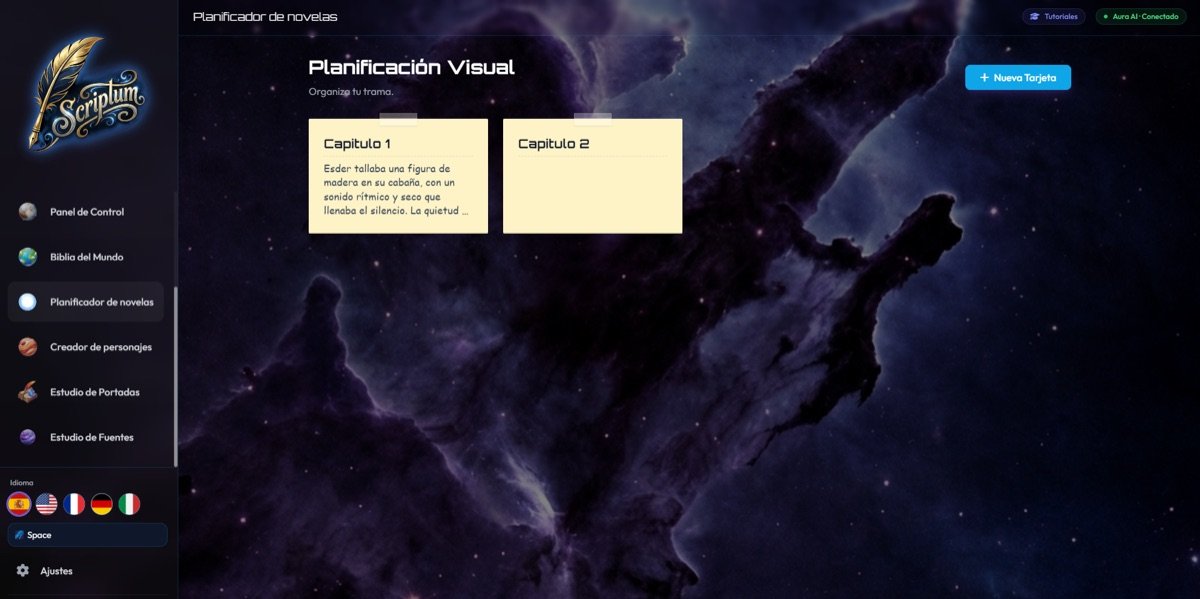
A novel without structure is a sequence of things that happen; one with structure is a story that means something. The foundation was set by Aristotle in his Poetics more than two thousand years ago: every narrative has a beginning, a middle, and an end. From that comes the three-act structure, still today the most widely used scaffolding.
| Act | % of the novel | What happens |
|---|---|---|
| Act 1: Setup | ~25% | You introduce the protagonist and their world. An event (the inciting incident) breaks their normality and launches them into the adventure. |
| Act 2: Confrontation | ~50% | The protagonist pursues their goal through growing obstacles. Crises, allies, twists. This is where most authors get lost. |
| Act 3: Resolution | ~25% | The climax resolves the main conflict and the character comes out transformed. The promises made to the reader are paid off. |
It's not the only recipe. The hero's journey, which Joseph Campbell described in The Hero with a Thousand Faces (1949), maps the stages of the classic myth and works beautifully for fantasy and adventure. The snowflake method, by physicist and novelist Randy Ingermanson, proposes another route: you start with one sentence, expand it to a paragraph, then to a page, and so on until you have the whole novel planned in layers. Choose the one that fits your head; they all chase the same thing: that the story moves forward with tension and purpose.
Step 4: Characters the reader won't forget
Readers don't remember plots; they remember people. A brilliant plot with cardboard characters is forgotten; an unforgettable character saves a weak plot. That's why it's worth investing here. A good character needs three things: a desire that drives them, a contradiction that makes them human, and an arc — that is, finishing the novel different from how they started.
Avoid the perfect hero: no one is 100% good or 100% bad, and the cracks are what make us believe in someone. Give your character a past before chapter one (even if you don't tell it all) and a wound that explains why they act the way they do. To keep track over months of writing, professional authors keep character sheets: one for each, with their appearance, voice, motivations, and relationships. Not to fill in fields for the sake of it, but to keep consistency when the minor character from chapter 2 reappears in chapter 18.
Step 5: The world where the story breathes
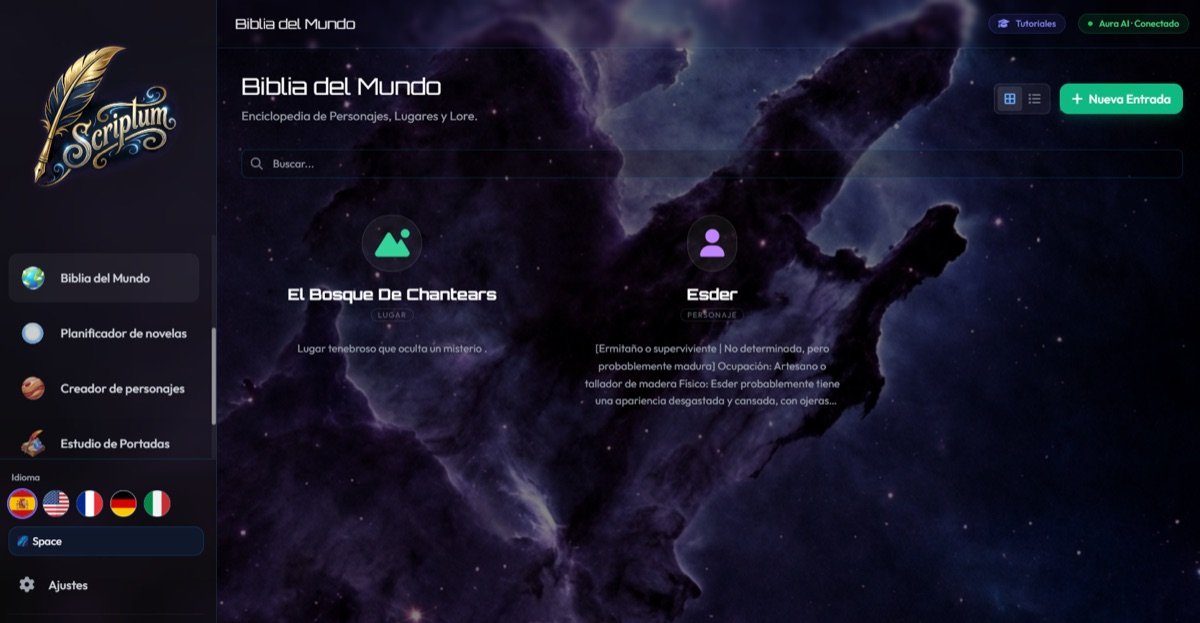
Every novel happens somewhere, and that somewhere has rules. In fantasy and science fiction it's obvious (you have to invent the magic, the technology, the peoples), but an urban thriller or a historical novel also need consistency of places, social norms, and atmosphere. Worldbuilding is what turns a backdrop into a place the reader believes they inhabit.
The key isn't to invent everything, but to create just enough for the story to breathe and keep the rest as an invisible foundation. If you want to go deeper into how to build a coherent universe without getting lost in the details, we develop it fully in our guide on worldbuilding: how to build your novel's world. Characters and world are the two faces of the foundation: when you have them clear, writing stops being guesswork.
Step 6: Writing the first draft (without looking back)

Here's where the real novel begins, and here's also where most people give up. The golden rule of the first draft is just one: your only job is to finish it. It doesn't have to be good. It has to exist. The fatal mistake is editing while you write: rewriting the first chapter forty times and never reaching the second. Move forward. There will be time to fix it.
To pull it off, set a small, sustainable daily goal — 500 words a day turns an 80,000-word novel into reality in six months — and protect it. And when the dreaded writer's block arrives (it will), remember that it's almost never a lack of ideas, but fear of writing badly. We have a whole guide dedicated to that: how to overcome writer's block with AI, with concrete methods to get going again when the blank page beats you.
Step 7: Rewriting, where the novel is born
Finishing the first draft is a huge achievement, but it's not the end: it's the raw material. There's a line attributed to Hemingway that every novelist should tattoo on themselves: "the first draft of anything is shit." It's not pessimism, it's liberation. It means the draft didn't have to be good; quality arrives in the rewrite, which is where the novel is really written.
Work in layers. First the structure: does the plot hold up, are there extra scenes, is tension missing? Then the characters: do their arcs close, are their voices distinct? Finally, the sentence: clarity, rhythm, cutting filler. A veteran's tip: let the manuscript rest for a few weeks before rewriting. Distance gives you back the reader's eyes, and you'll see coldly what you couldn't see up close.
There's no such thing as good writing, only good rewriting. The first draft is for you; the second is already for the reader.
Step 8: Publishing your novel
With the manuscript polished comes the final decision: how to publish it. There are two paths. Traditional publishing — finding an agent and a publisher — gives prestige and distribution, but it's slow and highly competitive. Self-publishing, especially through Amazon KDP, gives you full control and higher royalties in exchange for handling the formatting, the cover, and the promotion yourself.
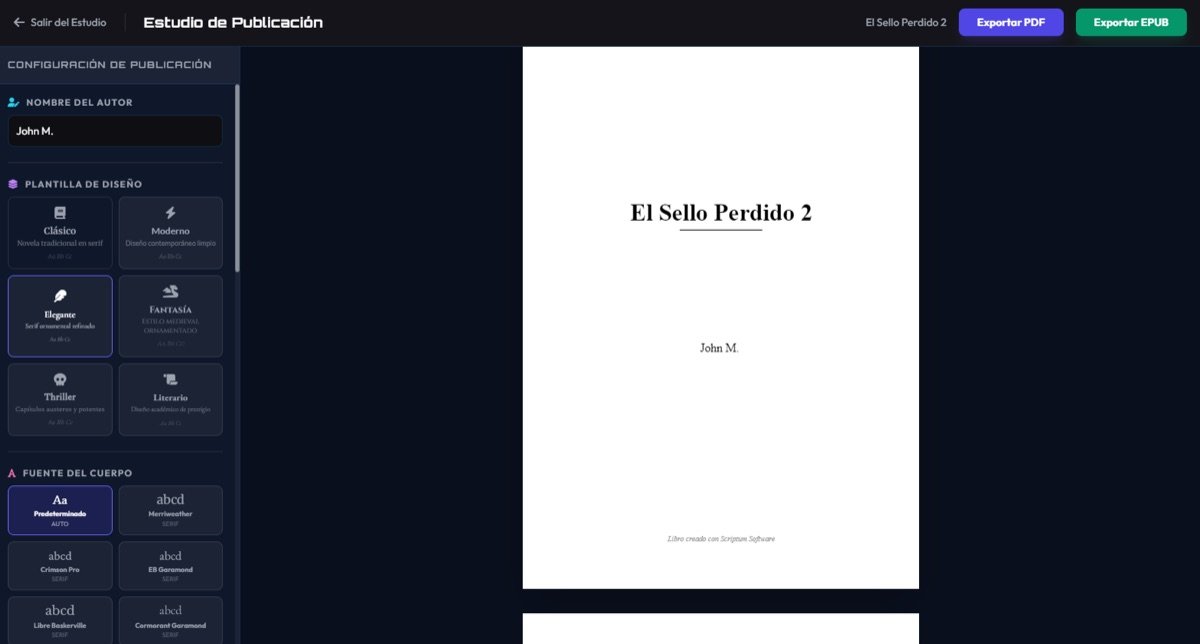
If you choose to self-publish, you'll need your novel in the right format: a PDF laid out at 6 × 9 inches for the print book and an EPUB or DOCX for the Kindle version. This is where having your manuscript in a tool that exports directly to those formats saves you weeks of fighting with Word templates. From finishing writing to having the file ready to upload can be a matter of minutes, not days. We cover the whole process in our guide on how to publish your novel on Amazon KDP.
Method matters more than inspiration
If you've made it this far, you can see that writing a novel isn't an act of magic, but a journey with clear stages: idea, structure, characters, world, draft, rewrite, and publication. The secret isn't to do it perfectly the first time, but not to give up between one stage and the next. And for that, it helps enormously to have everything in one place.
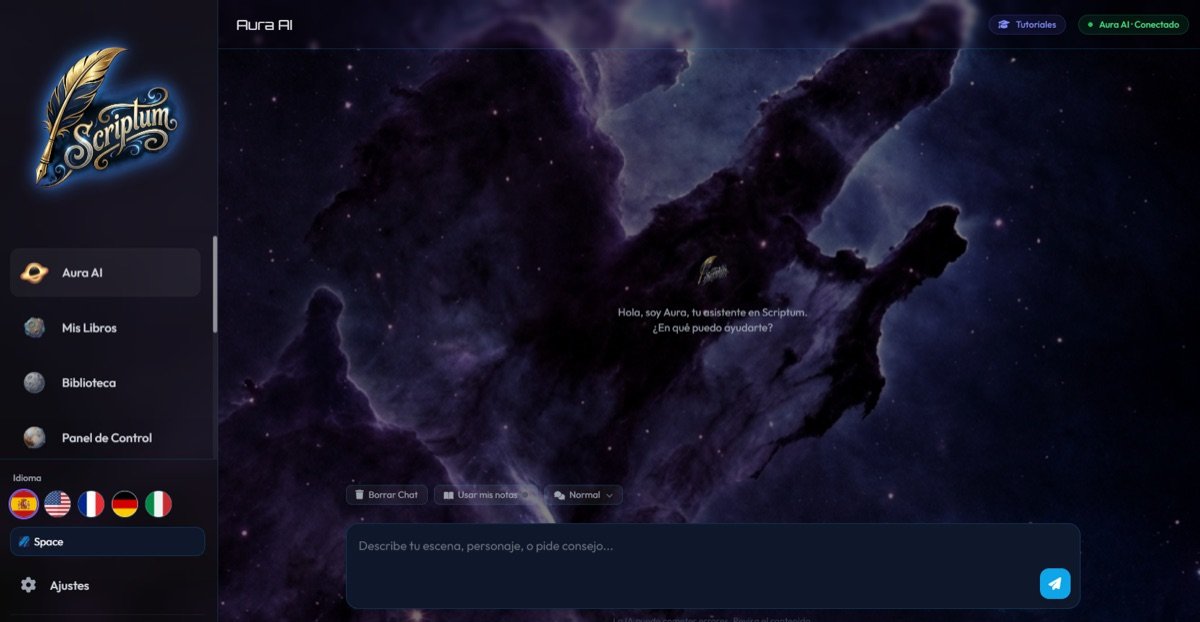
That's exactly what Scriptum does: it brings together the chapter editor, the Planner for structure, the World Bible for characters and places, the Aura AI that writes with you without losing your voice, and export to EPUB, DOCX, and PDF ready for KDP. The whole journey of this guide, from idea to book, inside a single tool built for novelists.
Frequently asked questions
How long does it take to write a novel?
It depends on the author and the pace, but a realistic first draft takes between three months and two years. Writing 500 words a day, a sustainable goal, an 80,000-word novel is finished in about six months. Consistency matters more than speed: it's better to write a little every day than a lot now and then.
How many words does a novel have?
The industry standard for an adult novel is between 70,000 and 100,000 words. Thrillers and romance usually run around 80,000; fantasy and science fiction allow more, between 90,000 and 120,000. Below 40,000 words it's considered a novella.
Should I plan the novel before writing or can I improvise?
Both ways are valid. Plotters plan the structure beforehand; pantsers discover the story as they write. Most work in between: a minimal guide of where the plot is going, with freedom to stray. What matters isn't the method, but finishing.
Do I need to write very well to start a novel?
Not to start. Prose quality is worked out in the rewrite, not the first draft. What you do need is to read a lot and write consistently: the craft is learned by practicing. The first draft just has to exist; improving it comes later.
What do I do when I get blocked while writing?
Writer's block is almost always fear of writing badly, not lack of ideas. The way out is to lower the bar for the first draft and write again, even a little. Techniques like writing a scene out of order, speaking the scene aloud, or using AI to break the blank page help you regain momentum.
Do I need special software to write a novel?
You can start in any word processor, but past a certain point an editor built for novelists saves you chaos: it organizes chapters, centralizes characters and places, and lets you export the manuscript ready to publish. Scriptum brings all of that together in one place, with an AI that writes with you.
Conclusion: start today, one page at a time
Writing a novel looks like a mountain until you break it into steps. You don't need the whole story in your head or to wait until you feel ready: no one ever is. You need an idea with conflict, a skeleton to hold it, characters that change, a coherent world and, above all, the discipline to write a little every day without judging yourself. The first draft will be imperfect — it has to be — and that's exactly where your real novel will begin, in the rewrite.
If you want to walk that whole path, from idea to publication, inside a single tool built for novelists — with a planner, a character bible, AI, and export to KDP — Scriptum is the writing studio that brings it all together. And to place the genre in its history, you can check the entry on the novel on Wikipedia. Your story already exists; all that's left is for you to write it.