To write a historical novel you need to balance two forces pulling in opposite directions: the rigour of research and the freedom of fiction. Investigate the period thoroughly — not just the dates, but how people lived, spoke, and thought — recreate it with details that feel alive, avoid the anachronisms that shatter the spell, and above all maintain the consistency of hundreds of details throughout the entire novel. In this guide I show you how to research without drowning in it, how to bring a period to life, and how to keep every thread under control, with examples you can start applying today.
Writing a historical novel is like building a house on foundations that already exist. You cannot move the load-bearing walls — what actually happened — but inside you have complete freedom to decorate, to invent who lives there, and to tell their story. That double game, rigour and fiction, is what makes the genre so fascinating and so difficult. If you have not yet mastered the basics of the craft, start with our guide on how to write a novel; here we go straight into the specifics of the genre that rewards hard work better than almost any other.
What is a historical novel (and the pact with the reader)
A historical novel is a work of fiction set in the past and recreated with enough rigour for the reader to feel it is real. That is the short definition, and the key word is real, not truth. You are not writing a history essay: you are writing a story that respects history.
That obliges you to enter into a silent pact with your reader. The historical fiction reader accepts that your characters and your plot are invented, but takes it for granted that the world they inhabit is faithful: that if you say a city had the plague in that year, it did; that if your protagonist pays with a coin, that coin existed. That is the ground you cannot afford to get wrong. The moment a reader catches a significant error, they stop trusting you — and without trust, immersion is impossible.
Research: investigate without drowning in it
Research is the heartbeat of the genre, and also its most common trap. There are two ways to fail: too little research, and the world rings false; too much research dumped wholesale onto the page, and the novel turns into a history lecture with dialogue. The goal is the point in between.
What to research (and it is not just dates)
Beginners research kings, wars, and dates. Good writers research daily life: what people ate, how they dressed, what a street smelled like, how much bread cost, how people travelled, what they feared, and what they believed. It is those small details — the ones that never appear in textbooks — that make a period breathe. A political fact gives context; a sensory detail gives life.
The iceberg: research deeply, reveal sparingly
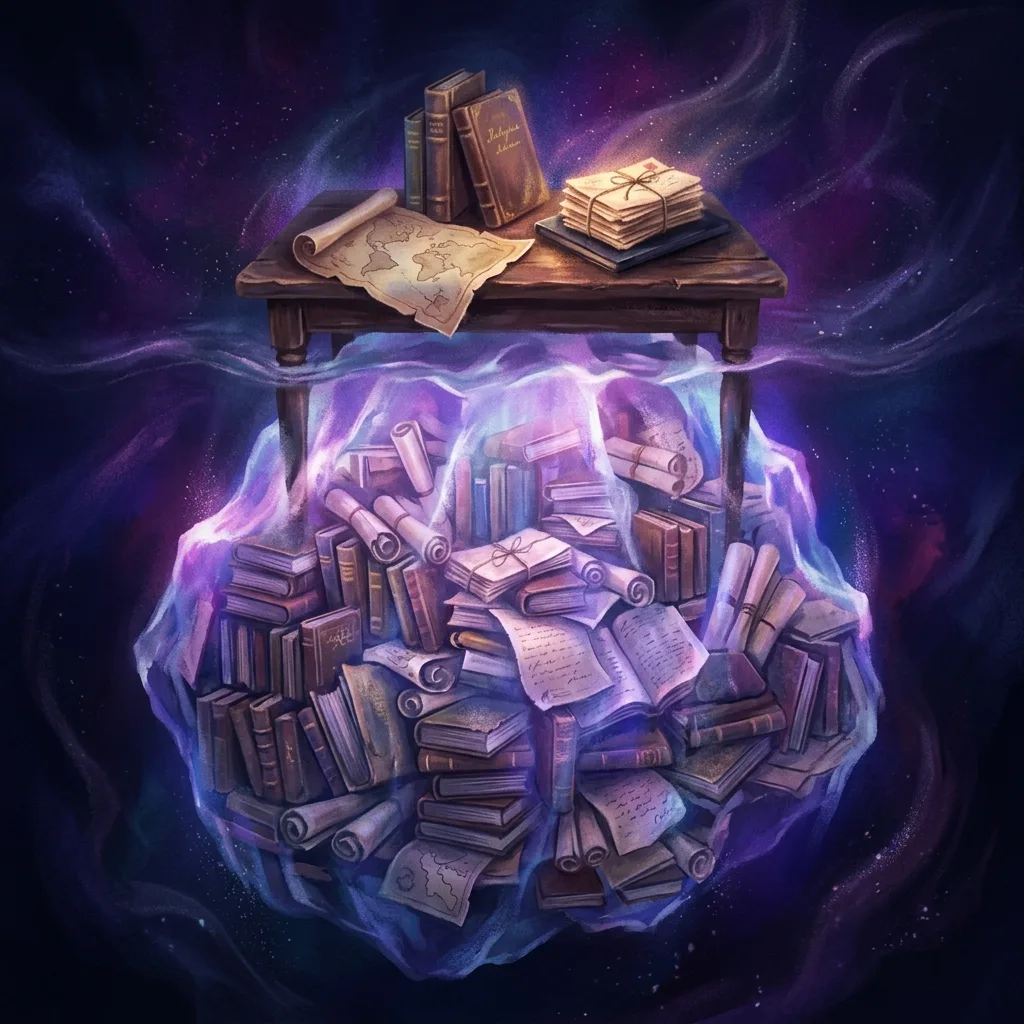
Here is the golden rule: research one hundred per cent and show ten. Everything you know must support the story from below, like the submerged part of an iceberg, but on the page only the minimum shows. When an author has truly done their research, they do not need to prove it: the confidence shows in small gestures, not in explanatory paragraphs. If you feel the urge to squeeze in three pages about the tax system of the empire because it cost you so much effort to understand, take a breath and cut them. The reader does not want your effort; they want your world.
Bringing a period to life (historical worldbuilding)
Recreating the past is very similar to building a fantasy world, with one crucial difference: that world existed, so you do not invent it, you reconstruct it. The techniques, however, are the same as those you would use in any setting — which is why it is well worth reading our guide on worldbuilding and adapting it to a real historical world.
The key is immersion through the senses. Do not describe the period: make the reader feel it. Rather than explaining that the city was unsanitary, let your character wrinkle their nose at the smell of stagnant water. Instead of stating it was winter in a century without central heating, show it in the mist of a breath and in fingers numb over a quill. Here the old principle of show, don't tell works double: the period reaches the reader through the skin, not through a footnote.
The balance between rigour and fiction
This is the genre's great question: how far can I invent? The practical answer is a hierarchy. Major events — who won a war, when a monarch died, the order of great happenings — are untouchable: contradicting them breaks the pact. But between those great milestones there are enormous blank spaces — the everyday, the intimate, what history never recorded — and that is where your fiction lives with complete freedom.
If you ever decide to alter something significant deliberately, through dramatic licence or by playing with alternate history, do it consciously and tell the reader in an author's note at the end. That note, where you explain what is real and what you allowed yourself, is a tradition of the genre and a mark of respect. The reader will forgive almost any liberty if you are upfront about it; what they will not forgive is feeling deceived.
Anachronisms: the invisible enemies
An anachronism is an element out of its time, and they come in two kinds. Visible anachronisms are easy to catch: an object not yet invented, a food not yet arrived from the Americas. Invisible ones are the dangerous kind: language and mindset. A fifteenth-century character who drops a modern expression, or who reasons about individual freedom the way someone today would, gives you away more than any misplaced wristwatch. Research not only the what, but the how people thought, and dedicate an entire revision pass to hunting down modernity that crept in unnoticed.
Real and fictional characters
Sooner or later you will face the decision of mixing characters who actually existed with the ones you invent. The safest and most common formula is simple: fictional protagonist, historical figures in the background. An invented character gives you complete freedom to move them, let them doubt and err, and they also serve as a bridge — the pair of eyes through which the reader enters the period.
If you decide a real figure will carry the weight of the novel, respect what is documented about their public life and reserve your invention for the shadow zones — what nobody recorded: their thoughts, their private conversations, their sleepless nights. Whatever mix you choose, all your characters — real or not — need desires, wounds, and contradictions to feel alive; if that aspect needs work, take a look at how to create unforgettable characters.
Consistency: your greatest challenge
This is the real headache of the historical novel. A novel in this genre accumulates hundreds of details that must fit together from the first page to the last: dates that cannot contradict each other, titles and ranks that must be accurate, realistic travel times and distances, currencies, fashions, names, hierarchies. Lose one piece and the mechanism creaks: the reader who notices a character taking two days for a journey that previously took two weeks is immediately jolted out of the story.
That is why, more than in any other genre, you need a system rather than your memory. The professional approach is to keep a novel bible: a sheet for each character, a timeline running parallel to real history, and a record of your setting decisions. Decide too whether you are a plotter or a pantser — it helps to read about plotter vs pantser — but in the historical novel even the freest discovery writer needs that data map.
And this is precisely where a writing tool takes an enormous weight off your shoulders. In Scriptum you store your period notes, historical facts, and timeline in your World Bible, and Scriptum's Memory keeps them in view as you write: it reads your Bible, your planning, and your chapters before suggesting anything, so the AI never contradicts you or slips in an out-of-place detail. It does not write the novel for you, but it ensures the clock of your world never drifts.
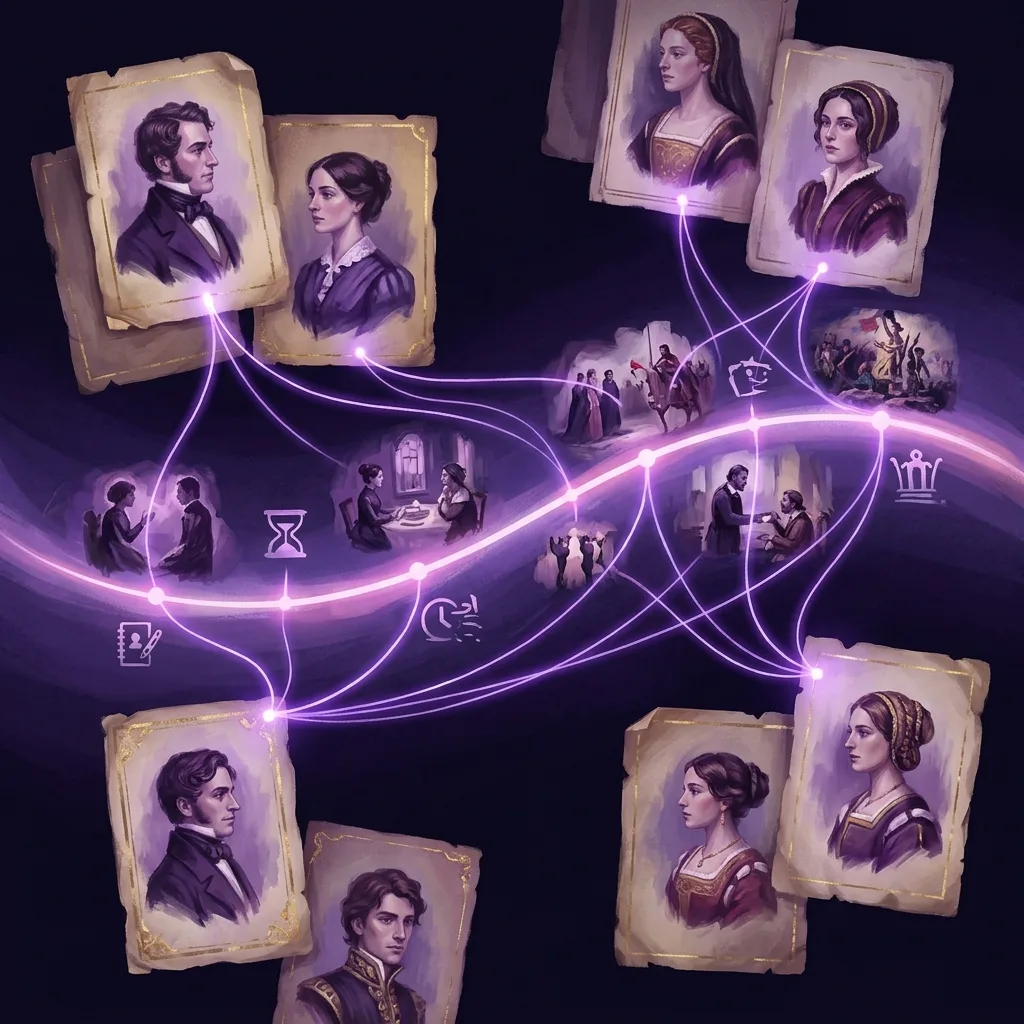
In the historical novel, the reader does not ask you to know everything; they ask you not to lie to them. Data supports the world, but it is the emotional truth of your characters that makes that world matter.
Reading to master the historical novel
There is no better school for a genre than reading those who have mastered it. These five works are benchmarks of historical fiction; read them not only for pleasure, but with a writer's eye — notice how they handle research, voice, and the consistency we have been discussing throughout this guide.
| Reference work | Author | What to learn from it |
|---|---|---|
| Memoirs of Hadrian | Marguerite Yourcenar | The first-person voice of a mind from another era, made utterly convincing. |
| I, Claudius | Robert Graves | How to give real historical figures an intimate inner life without betraying the documented record. |
| The Name of the Rose | Umberto Eco | Research that breathes on every page without ever tipping into essay. |
| Wolf Hall | Hilary Mantel | Reconstructing the mindset and politics of an era without a single anachronism. |
| The Pillars of the Earth | Ken Follett | Weaving a coherent, compulsive fiction on top of a real historical framework. |
Study how the masters do it, then sit down to write your own, with every detail under control, in Scriptum.
Frequently asked questions
What is a historical novel?
A historical novel is a work of fiction set in a past era and recreated with enough rigour for the reader to feel it is real. The key is the balance: real events as foundations and invented characters or plots as the building upon them. It is not a history book, but not anything goes either: the pact with the reader is that what happened, happened that way.
How much research does a historical novel require?
Enough for the world to breathe, and a little more than you will actually use. The practical rule is the iceberg: you research deeply, but only ten per cent surfaces on the page. You need to master the daily life of the period plus the key events that touch your plot. The mistake is not doing too little research, but dumping it all in and turning the novel into an essay.
What is an anachronism and how do you avoid it?
An anachronism is an element out of its time: an object, a word, an idea, or an attitude that did not exist in the period. The most treacherous are not objects but language and mindset: a medieval character who thinks like a twenty-first-century person breaks the spell. You avoid them by researching not only the what but the how people thought, and by reviewing the manuscript specifically to hunt down modern words and values.
Can I change real historical events in my novel?
You can, but with judgement, and it is almost always wise to flag it. The most respected practice is not to contradict major events and only to move the small or unknown details, where fiction has room. If you alter something significant deliberately, tell the reader in an author's note at the end. Breaking the pact without warning is what historical fiction readers never forgive.
How do I mix real and fictional characters?
The safest approach is a fictional protagonist with real historical figures in the background — just enough to add colour without forcing you to invent the thoughts of someone who existed. If a real figure is the protagonist, respect the documented record of their public life and reserve invention for the shadow zones. A fictional character gives you complete freedom and serves as a bridge for the reader to enter the period.
How do I keep so many historical details consistent?
With a system, not with your memory. A historical novel accumulates hundreds of details that must hold together from first page to last. The professional approach is to keep a novel bible: character sheets, a timeline running parallel to actual history, and a record of your setting decisions. That way, when you mention a price or a title in chapter twenty, you can check it matches what you wrote in chapter three.
Conclusion: truth above data
Writing a historical novel is, at its core, the art of disappearing: all that research effort so that none of it shows. Research deeply and reveal sparingly, recreate the period through the senses, respect the major events and play in the gaps, watch for invisible anachronisms, and above all keep every detail under control so your world never contradicts itself. But do not forget the essential: data holds up the set, and it is your characters who make the reader stay.
Now it is your turn. Open your World Bible, build your timeline, and start reconstructing your era — with every detail under control — in Scriptum.