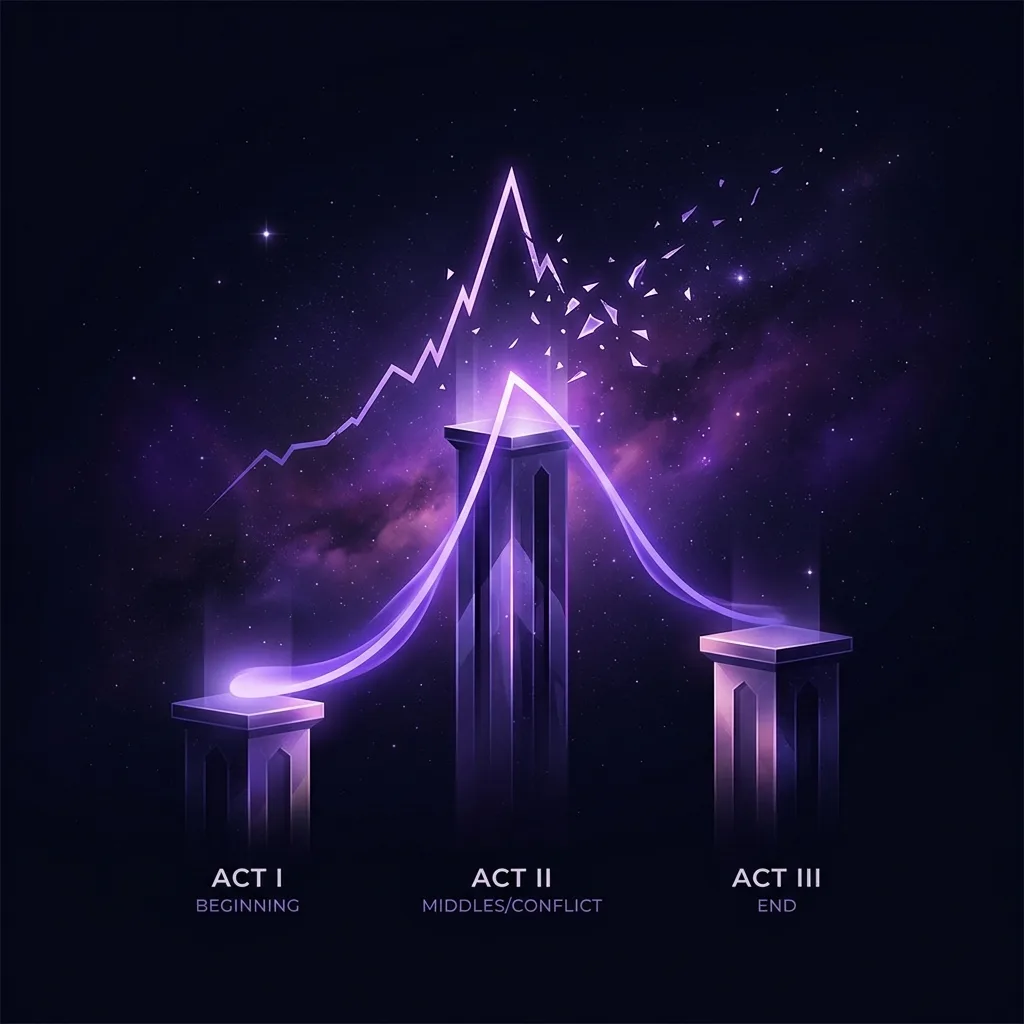
The three-act structure divides your novel into setup (25%), confrontation (50%), and resolution (25%). Act 1 introduces the protagonist and launches the conflict with an inciting incident; Act 2 piles on obstacles until a crisis; Act 3 resolves everything in the climax. The hinges between acts — the plot points — are what keep the tension up and stop the story from sagging in the middle.
Almost every novel abandoned halfway dies at the same spot: the middle. The author had a promising opening and an idea for the ending, but the center turned into an aimless swamp. The three-act structure exists so that doesn't happen to you: it's the map that holds the story up from the first page to the last. It's not a straitjacket, it's a skeleton. And like any skeleton, you don't see it, but without it the story can't stand. If you want to place structure within the complete process, start with our guide on how to write a novel, from idea to publication.
What is the three-act structure?
The three-act structure is the narrative model that divides a story into three parts with distinct functions: setup, confrontation, and resolution. It comes from classical theater (it was already in Aristotle), and the screenwriter Syd Field popularized it for film, but it works just as well in the novel. It responds to something deeply human: every story we feel is complete has a beginning that orients us, a development that tightens us, and an ending that closes.
The reference proportions are these:
| Act | Function | Length |
|---|---|---|
| Act 1: Setup | Introduce the protagonist, their world, and the conflict | ~25% |
| Act 2: Confrontation | The conflict grows with escalating obstacles | ~50% |
| Act 3: Resolution | The climax resolves the story | ~25% |
Act 1: the setup (the world and the spark)
The first act has a single mission: to make the reader understand who the protagonist is, what they want, and what's going to stand in their way. You have little time, so every scene must introduce and advance at once. Its key pieces:
- The ordinary world. What the protagonist's life is like before everything changes. It serves as a contrast with what's coming. This is where your worldbuilding does its first job.
- The inciting incident. The event that breaks the routine and sets the story in motion: a letter, a death, an offer, an encounter. Without an inciting incident there's no novel, only description.
- The first plot point. The moment the protagonist decides to act and crosses the threshold into the conflict. This is where Act 1 ends.
The most common mistake here is taking too long to get going. If your inciting incident arrives on page 60, the reader already closed the book. Get into the conflict early.
Act 2: the confrontation (where the novel is won or lost)
The second act is the longest and the most feared, because it's where most stories sink. The protagonist pursues their goal and the world makes it harder and harder. The golden rule is that obstacles must escalate, not repeat horizontally. Every scene has to raise the stakes.
Inside Act 2 there are two milestones that save it from becoming filler:
- The midpoint. Right at the center of the novel, a twist changes everything: a revelation, a betrayal, a victory that turns out to be a trap. The midpoint turns the protagonist from reactive to active and splits Act 2 into two halves with different energy.
- The crisis (the lowest moment). Toward the end of the act, everything collapses. The protagonist loses almost everything and it seems there's no way out. That rock bottom is what makes the climax matter.
The second plot point closes the act: after the crisis, the protagonist finds the determination (or the clue, or the strength) for the final push. If Act 2 gets stuck on you, it's not a lack of inspiration: it's almost always a structural problem. Our guide to overcoming writer's block gives you concrete ways out.
Act 3: the resolution (the climax and the close)
The third act is fast and unstoppable. Everything you planted is collected here. It has two parts:
- The climax. The final confrontation between the protagonist and whatever opposes them. It's the point of maximum tension, where the dramatic question you opened in Act 1 is resolved.
- The resolution. The final pages that show the new balance: how the protagonist and their world have changed. Brief, but necessary for the reader to close the book satisfied.
The typical Act 3 mistake is the opposite of Act 1's: resolving it in a rush. If you've done the rest well, the climax deserves room to breathe.
The plot points: the invisible skeleton
If you take just one thing from this article, let it be this list. These five beats are the hinges of any well-structured novel:
- Inciting incident: the story gets going (end of the first quarter, in Act 1).
- First plot point: the protagonist commits (end of Act 1).
- Midpoint: a twist changes everything (center of the novel).
- Second plot point: after the crisis, the final push (end of Act 2).
- Climax: the resolution of the conflict (Act 3).
Place them in your story and you'll have a solid skeleton to write on freely.

How to apply the structure without it boxing you in
The structure is scaffolding, not a prison. It works in two ways: as a guide before writing (for those who plan) and as a diagnostic tool afterward (to review why something isn't working). Having the acts and plot points in view while you write tells you instantly whether the pace is deflating or whether a scene isn't pulling the plot along.
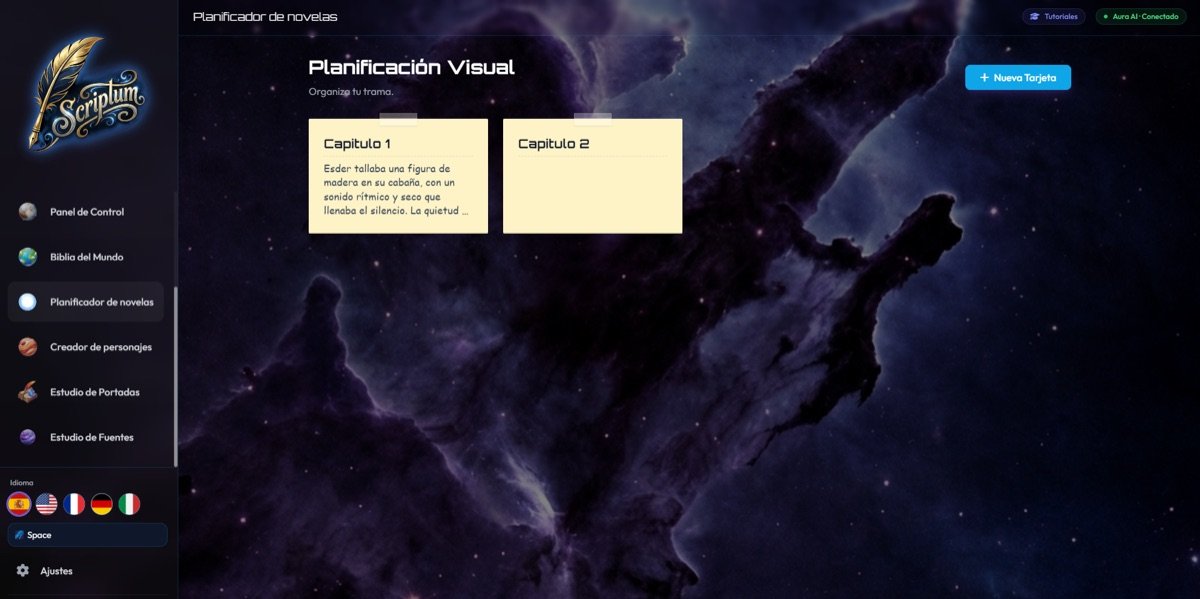
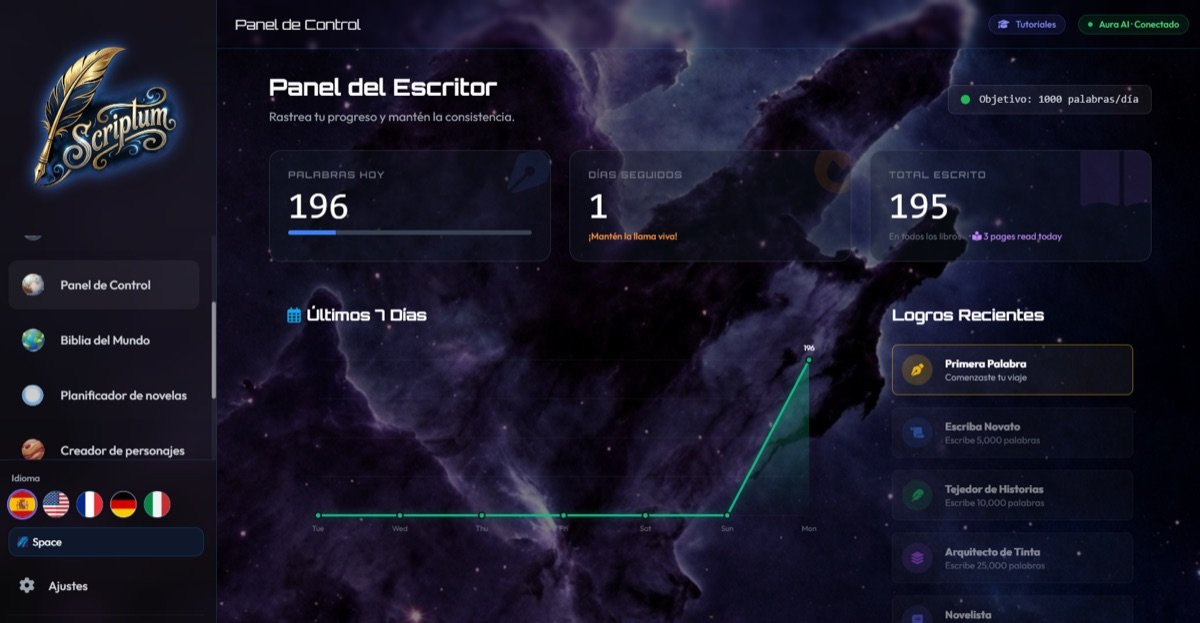
In Scriptum, the Planning Board lets you map the acts, mark the plot points, and reorder scenes by dragging them, so your novel's architecture is always in front of you instead of in your head.
Common mistakes when structuring your novel
- An endless Act 1. Too much setup before the inciting incident. The reader wants conflict, not a tour of your world.
- A flat Act 2. Obstacles that repeat without escalating. If scene 14 has the same tension as scene 4, the plot isn't advancing.
- No midpoint. The center turns into a long hallway. The midpoint is what splits the act and renews the energy.
- A rushed climax. Resolving in two pages what took you 300 to build. The ending deserves its space.
- Structure over character. Hitting the beats without them growing out of the protagonist's decisions. Structure serves the story, not the other way around.
Frequently asked questions
What is the three-act structure?
It's the narrative model that divides a story into three parts: setup (introducing the protagonist and their world), confrontation (the conflict grows with obstacles), and resolution (the climax resolves the story). The usual proportions are 25%, 50%, and 25%. Between acts there are plot points that push the story forward.
Do I have to plan the three acts before writing?
It's not mandatory. Plotters plan them in advance; pantsers discover them as they write. But knowing the structure helps in both cases: as a guide for planning or as a diagnostic tool to review why a part isn't working.
How long should each act be?
As a reference, Act 1 takes up around 25% of the novel, Act 2 around 50%, and Act 3 the remaining 25%. They aren't rigid figures, but if your setup runs longer than a third or your resolution wraps up in two pages, it's usually a sign of a pacing problem.
How is it different from the three acts of the hero's journey?
The hero's journey is a template of concrete stages (the call, the mentor, the return) that fits inside the three-act structure. The three acts are the general skeleton; the hero's journey is one of many ways to flesh out that skeleton. You can use the three acts without following the hero's journey.
Does the three-act structure work for any genre?
Yes. It works in thriller, romance, fantasy, literary, or historical fiction, because it responds to how humans perceive a story: a beginning, a development, and a meaningful ending. What changes between genres is the content of each act, not the architecture that holds them up.
Conclusion: structure frees you, it doesn't trap you
Knowing the three-act structure doesn't turn you into a mechanical writer: it gives you the confidence of always knowing where you are and where you're going. Setup to hook, confrontation to tighten, resolution to close, and the plot points as hinges that keep everything in motion. With that skeleton clear, you can spend your energy on what really matters: the characters, the voice, and the scenes only you can write.
If you want your novel's structure always in view while you write, Scriptum's Planning Board was built for exactly that. To dig deeper into the classical theory, you can also check the entry on the three-act structure on Wikipedia.