A World Bible is the master document of your story: character sheets, locations, timeline and world rules, all gathered in your single source of truth. Its job is to make sure you never contradict yourself — especially in long novels and series, where it is impossible to hold everything in your head. In this guide I explain what to include, how to organise it, and — the hardest part — how to keep it consistent across several books so no reader ever catches a loose thread.
Every series you admire has a World Bible behind it, whether you see it or not. It is what allows a character in book four to recall something from book one without the dates clashing, a place to keep the same climate, and magic to obey the same rules. It is the difference between a world that holds together and one that falls apart the moment the reader pays close attention. If you have not yet mastered the fundamentals of world-building, start with our guide on worldbuilding; here we go straight to the part that is genuinely hard: keeping it consistent.
What a World Bible is (and why you need one)
A World Bible is the database of your story: the place where all the information that must stay consistent lives. It is not the plot (that is the outline), but the universe in which the plot unfolds. Your single source of truth: when you are unsure about a detail, you look it up there, and there is the right answer.
Why do you need it? Because your memory lies. In a 90,000-word novel you are juggling hundreds of details — names, ages, dates, descriptions, relationships — and in a series, thousands. Nobody remembers exactly what colour eyes a minor character had two hundred pages back. The World Bible remembers for you, and that is why it is the tool that separates a coherent work from one riddled with loose ends.
What to include in your World Bible
There is no single template, but these are the pillars almost every story needs:
- Characters. A sheet for each one: appearance, personality, motivations, wounds, relationships, and arc. This is the most consulted section; if it feels weak, revisit how to create unforgettable characters.
- Locations. Geography, climate, atmosphere, maps. Where each event takes place and how to get from one place to another (distances matter more than you think).
- Timeline. A chronology with key events, the ages of characters at each moment, and the order of everything that has happened.
- World rules. How magic, technology, politics, economics, or society works. The rules you establish are promises you cannot break.
- Genre extras. Languages, houses or lineages, religions, creatures, significant objects. Everything that, if it silently changes, would shatter the illusion.
World Bible vs outline
This is a common source of confusion. The outline is the plan for the plot: what happens, in what order, scene by scene. The World Bible is the foundation of the universe: who is who and how everything works. The outline tells the story; the bible supports the world where it takes place. Deciding whether you are more of a plotter or a pantser will help you use both (we cover it in plotter vs pantser), but note: you need a bible regardless of which camp you are in, because consistency does not care about writing style.
The consistency challenge in a series
Maintaining consistency in a single novel is already demanding. In a series of three, five, or ten books it becomes the greatest technical challenge of the whole project. A detail you established in book one — a character's age, a promise, the rule of a magic system — has to remain true five years and half a million words later.
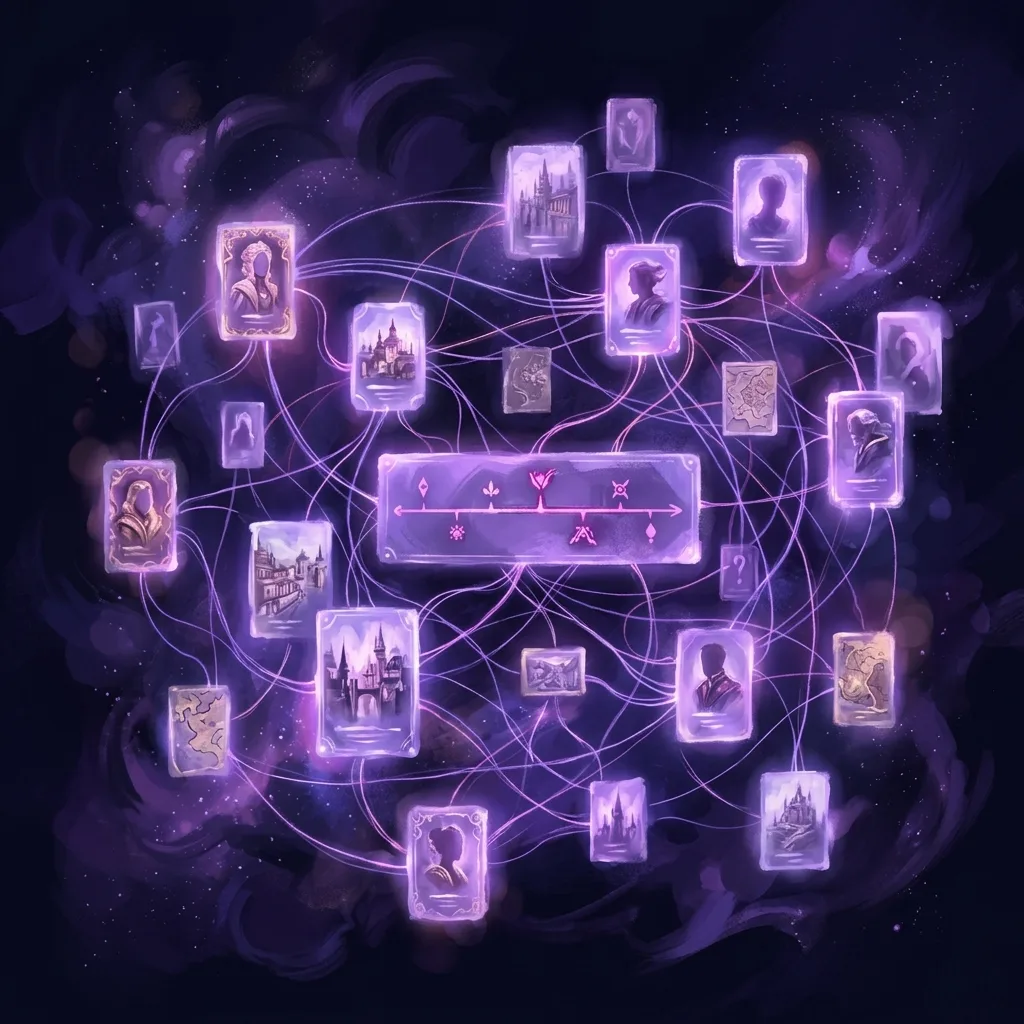
The key is one thing: a single living World Bible that covers the whole series, not one per book. Every new detail is recorded the moment you create it; every time you are about to state something about the story's past, you check the bible instead of trusting your memory. Mistakes in long series are not born of bad writing, but of forgetting what was already written. The bible is the antidote.
Consistency mistakes that give you away
These are the errors that pull readers out of the story most abruptly — and all of them are preventable with a well-kept bible:
- Ages and dates that do not add up. A character who ages faster or slower than they should between two scenes.
- Accidental physical changes. Blue eyes that are green in another chapter; a scar that appears or disappears.
- Inconsistent names. A secondary character whose surname changes midway through the series.
- Impossible geography. A journey that took two weeks before and now takes two days.
- Broken rules. A magic system that suddenly can do something the book said was impossible.
How to keep it alive without going mad
Here is the real problem: a World Bible is only useful if you keep it up to date and actually consult it. Doing that by hand, in a text document that grows without restraint, eventually becomes exhausting: you have to hunt for every detail yourself, and an oversight still slips through. That is why it pays to have a bible that is not a dead file, but something connected to your writing.
That is exactly what Scriptum does. You save your character sheets, locations, timeline, and world rules in your World Bible, and Scriptum Memory keeps them in view as you write: it reads your Bible, your planning, and your chapters before making any suggestion, so the AI continues your story without contradicting it or inventing a detail you had already fixed. Instead of tracking down every piece of information yourself, the system holds it for you, chapter by chapter and book by book. For a long series, that is not a luxury: it is what keeps the world standing.
Consistency is invisible when it is done well: the reader does not notice it, they simply trust the world. It only becomes visible when it fails — and by then you have already lost them. A World Bible is the silent work that upholds that trust all the way to the last page of the series.
Frequently asked questions
What is a World Bible?
It is the master document where you gather all the information about your story: character sheets, locations, timeline, world rules, and any detail that needs to stay consistent. It is not the plot, but the database on which the plot is built: your single source of truth for never contradicting yourself, especially in long novels and series.
What should a World Bible include?
Character sheets (appearance, personality, motivations, relationships, arc), locations (geography, atmosphere, maps), a timeline, and the internal world rules (magic, technology, politics, society). Depending on the genre, you will add languages, lineages, religions... Include everything that, if you inadvertently change it later, would break consistency.
How is it different from an outline?
An outline is the plan for the plot: what happens and in what order. The World Bible is the database of the universe: who is who and how everything works. The outline tells the story; the bible supports the world where it takes place. They are complementary.
How do I maintain consistency across a multi-book series?
With a single living World Bible for the whole series, not one per book. Record every new detail as you create it and consult it before using it, rather than trusting your memory. In long series, mistakes come from forgetting what was written books ago; the bible is your insurance against that.
Do I need a tool or will a document do?
For a short novel, a document may be enough. As the story grows, a flat document becomes unmanageable and it is easy for a contradiction to slip through. A tool designed for writers lets you keep your sheets connected and lets the AI you write with keep them in view to alert you if you contradict yourself.
How do I avoid contradictions in long novels?
Record every new detail as you create it, check the bible before stating anything about the story's past, and do a dedicated consistency review at the end (dates, ages, names, distances, rules). In novels of 100,000 words or more, what fails is not imagination but memory. Having a system remember the details for you is what stops the reader catching the mistake.
Conclusion: consistency is invisible (when it works)
A World Bible does not show in the finished work — and that is precisely the sign that it is doing its job. The reader does not see your sheets or your timeline; they simply feel that the world is solid, that they can trust it. Gather your characters, locations, chronology, and rules in one living place, keep it up to date, and consult it without laziness. It is the silent work that makes great series great.
Start building yours, with every detail under control and your AI watching over consistency, in Scriptum.