In a long novel, plot holes aren't a failure of talent — they're a failure of memory. Past 100,000 words, no writer can simultaneously hold every detail they've established across 400 pages. This guide breaks down the five most common types of plot hole, explains why they multiply in longer projects, shows you how to prevent them with a solid story bible, how to track them down in revision, and — above all — how to patch them without the fix opening three new holes.
You've just written chapter 42 and you notice something: back in chapter 8, your protagonist lost the apartment key — but in chapter 35 she used it without anyone mentioning it. Or worse: in chapter 11 you established that the magic in your world costs the caster years of their life, but in chapter 40 your mage casts freely with zero consequences. Welcome to the number-one problem in long novels: the plot hole.
If you're still learning to shape a long, complex story, you might want to start with the complete guide to writing a novel. Here we assume you already have a draft — or you're in the middle of one — and the holes have started to show.
What a plot hole is and why long novels breed them
A plot hole is any internal inconsistency that breaks the logic of the narrative world you've built. It's not something that's implausible by real-world standards — it's something that contradicts the rules, facts, or relationships you yourself established inside your story. A reader doesn't need to be a quantum physicist to notice that the character who swore they would never walk through that door again walked through it in the very next chapter without a word of explanation.
The reason long novels breed more of them is structural. In a 5,000-word short story, all the information fits inside the writer's active memory while they're working. In a 100,000-word novel, that luxury vanishes. Every new chapter is written from a state of partial information: you remember recent events clearly and gradually lose grip on the distant ones. And the cruel irony is that the better the novel, the more detail it contains — and the more vectors for inconsistency it creates.
The 5 most common types of plot hole
Before you can hunt a plot hole, you need to recognise what you're looking at. Here are the five types that appear most often in long novels:
1. Causality holes
Something happens without sufficient cause. A character obtains information nobody gave them, solves a problem with a resource they didn't have, or turns up somewhere the story never explains how they reached. The classic test: how does X know what they know in this scene? If there's no answer, there's a hole.
2. Continuity and detail holes
These are the most common in long manuscripts and the most infuriating for dedicated readers. A supporting character's eye colour shifts between chapter 4 and chapter 22. The weapon the protagonist lost in the river reappears on their belt three chapters later. The serious shoulder wound is gone by the next day of story time. These errors don't break the plot's causality, but they destroy the sense that the world is real and consistent.
3. Character coherence holes
A character acts in direct contradiction to their established psychology, and nothing justifies it. The careful coward suddenly makes a reckless, heroic decision that fits nothing we've seen before. The antagonist defined by her coldness has a sentimental outburst that defies her entire arc. These holes are especially damaging because they undermine character credibility — the heart of any novel. To avoid them from the start, it's essential to know how to create memorable characters with coherent psychology from the very beginning.
4. Chronology and timeline holes
Events simply don't fit in time. If the protagonist travels from one city to a remote village in what appears to be an hour of story time, but the trip should take four hours, there's a timeline inconsistency. If two characters are described as being in the same place but a page earlier one of them was on a different continent, there's a chronology problem. In novels with multiple points of view or parallel subplots, these errors multiply exponentially.
5. World-rules holes
Especially common in fantasy, science fiction, and stories with supernatural elements. The writer lays down rules for their magic system, their technology, or their universe — then breaks them when the plot needs a favour. If telepathy in your world only works with line of sight and your character suddenly uses it at a distance without any established development, readers will notice. Worldbuilding demands absolute internal consistency: you can invent any rule you like, but once it's on the page, you have to respect it or explicitly justify the exception.
Why they slip through at 100,000 words
Plot holes aren't a sign that you're a bad writer — they're a predictable consequence of how human memory works. Working memory has a finite capacity: it holds recent chapters clearly, but further back the details blur. When you're in chapter 38 writing an intense scene, you're not consulting what you established in chapter 7; you're inside the scene, inside the character, inside the rhythm. Distant details evaporate.
Non-linear writing compounds the problem. Many novelists write scenes out of order, or change a decision about a character mid-project without updating everything that decision affects. Every retroactive change is a consistency time bomb. And in novels with multiple subplots, the number of relationships, secrets, and positions in time and space that need tracking exceeds what any mind can manage without an external system. A deliberate narrative architecture — like the three-act structure — narrows the space of possible inconsistencies from the outset.

Your first line of defence: the story bible
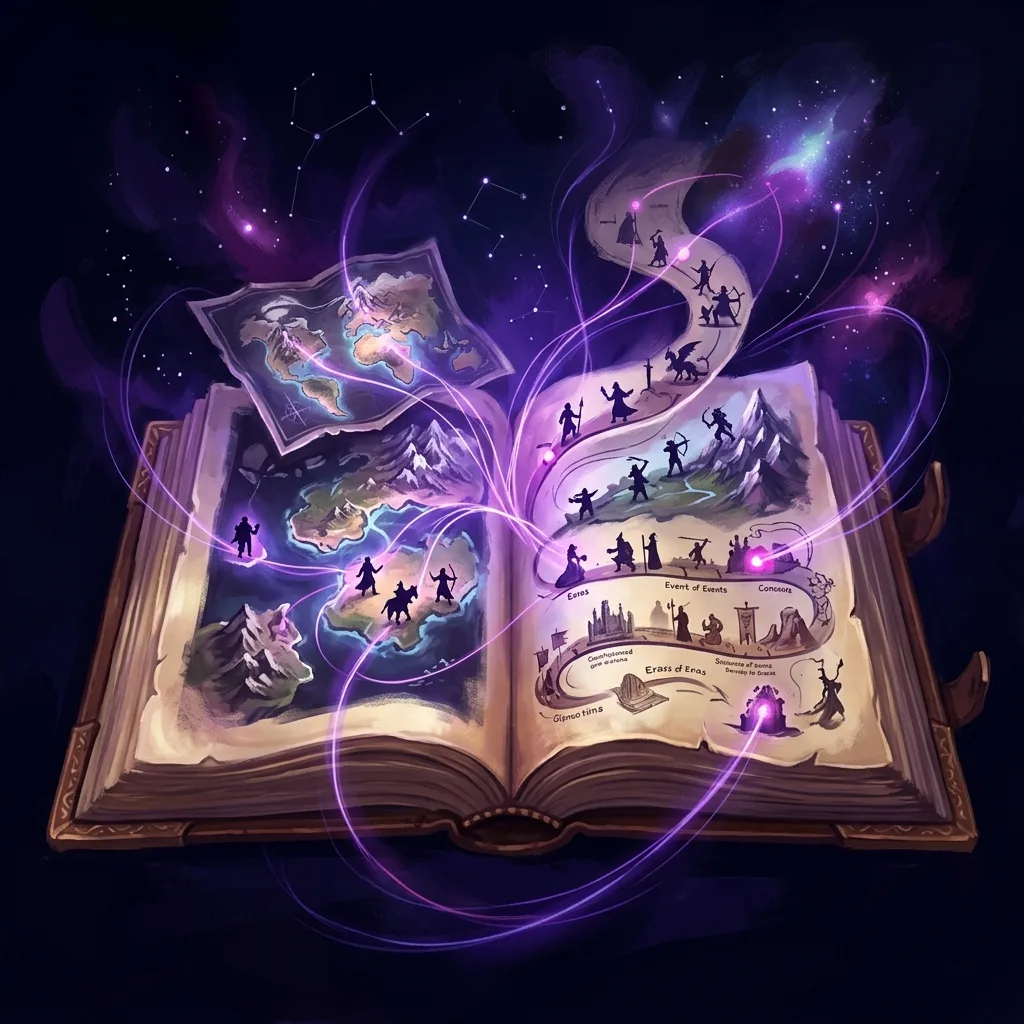
The most effective solution is also the simplest: externalise your memory. If your head can't hold everything, you need a document that will. That's what a story bible is — your first line of defence before the hole even exists. A well-built story bible has at least these elements:
- Complete character sheets. Not just physical traits, but values, fears, relationships, what each character knows and doesn't know at each point in the plot, and what they own. The inventory of possessions sounds trivial until chapter 30, when you reach for something the character lost in chapter 12.
- Event timeline. A table where every significant event has a date or relative position, so you can catch a character trying to do something the story's clock simply doesn't allow.
- Explicit world rules. Everything you've established about your magic system, your technology, or the natural laws of your universe — written precisely enough to flag when a scene violates them.
- Subplot map. Opening, conflict, and resolution for every secondary storyline. This prevents the classic floating subplot: the thread you opened in chapter 14 that you never closed.
- Secrets and revelations log. What each character knows at each point in the story. One of the most frequent holes occurs when a character reacts to information they haven't received yet, or ignores something they should already know.
For a detailed walkthrough on building this document step by step, read the guide on creating a story bible for series consistency — especially useful if your project spans a series or trilogy.
Tracking consistency without re-reading everything
A story bible is indispensable, but it has a practical problem: keeping it updated while writing at a good pace is costly. Every time you introduce a new detail, shift a relationship, or resolve a subplot, you have to remember to update the document. And when you're in a flow state writing scenes, that doesn't always happen.
This is where one of Scriptum's most valuable features comes in: Scriptum Memory. The idea is simple but powerful: your writing assistant keeps your novel consistent so you don't have to re-read entire chapters every time you need to check a detail.
When you write with Scriptum, the assistant keeps track of what you've established throughout the manuscript — a secondary character's eye colour, the sequence of events, the rules of your magic system, secrets a character is guarding and those they've already revealed. This doesn't mean the AI writes for you: it means you have a consistency co-pilot that, in chapter 40, can flag that a scene contradicts something you established 100 pages back, before the hole exists. The difference between catching a plot hole in a draft and catching it after you've finished the novel is enormous: in the draft the fix is surgical; after the fact it can mean cascading revisions across dozens of chapters. This is especially critical in fantasy, science fiction, or series, where the details of book one must hold in book three. And if you wrote a fast first draft during NaNoWriMo, hunting plot holes is the first task of revision.

Revision techniques for hunting plot holes
Even with the best story bible and the best assistant, the revision phase is still where the holes that slipped through get caught. These are the most effective techniques for finding them before they reach readers:
Reverse reading
Read the manuscript from the end back to the beginning, chapter by chapter (not sentence by sentence). This breaks the narrative pull: you're no longer inside the story, so causality jumps become visible. If something happens in chapter 30 and nothing in chapter 25 explains it, you'll catch it because you're reading backwards.
The subplot map
A table listing every secondary storyline with its opening chapter, central conflict, and closing chapter. If any row has the closing chapter blank, you have a floating subplot — either a plot hole or an unresolved thread.
The per-chapter continuity checklist
For each chapter, note: where is each character? What time is it? What do they have on them? What do they know? Comparing these tables across consecutive chapters reveals the majority of continuity and timeline holes. It's painstaking work, but irreplaceable in novels with many characters and parallel subplots.
The specialist beta reader
Tell your beta reader explicitly to hunt inconsistencies rather than enjoy the story: "Note down any moment where something doesn't match what was established earlier." An active reader spots what the author — too deep inside the story — cannot see. For a complete layered revision method, check out the guide to self-editing your novel.
How to patch a hole without opening three more
Finding the hole is half the work. The other half is fixing it without creating new problems — the hasty patch that generates more inconsistencies than the original hole is the most common revision mistake. Your first step is always to classify the type, because the fix varies radically:
- Causality hole: plant the seed earlier. If in chapter 30 your character knows something nobody told them, add a scene or object in an earlier chapter that gives them that information. The patch goes before the symptom, not on top of it.
- Continuity detail hole: surgical fix. Search for every mention of the incorrect detail and correct them consistently. Use text search to make sure you don't miss any instance.
- Character coherence hole: either justify the behaviour by adding a motivation that explains it, or revise the arc to turn what looked inconsistent into the turning point of their development.
- Timeline hole: review the timeline of the affected segment. Sometimes adding an explicit time jump ("two days later") is enough; other times you need to redistribute events across chapters.
- World-rules hole: rewrite the scene that violates the rules, or explicitly justify the exception within the logic of the world. A well-motivated exception can become a powerful conflict; left unexplained, it's just a hole.
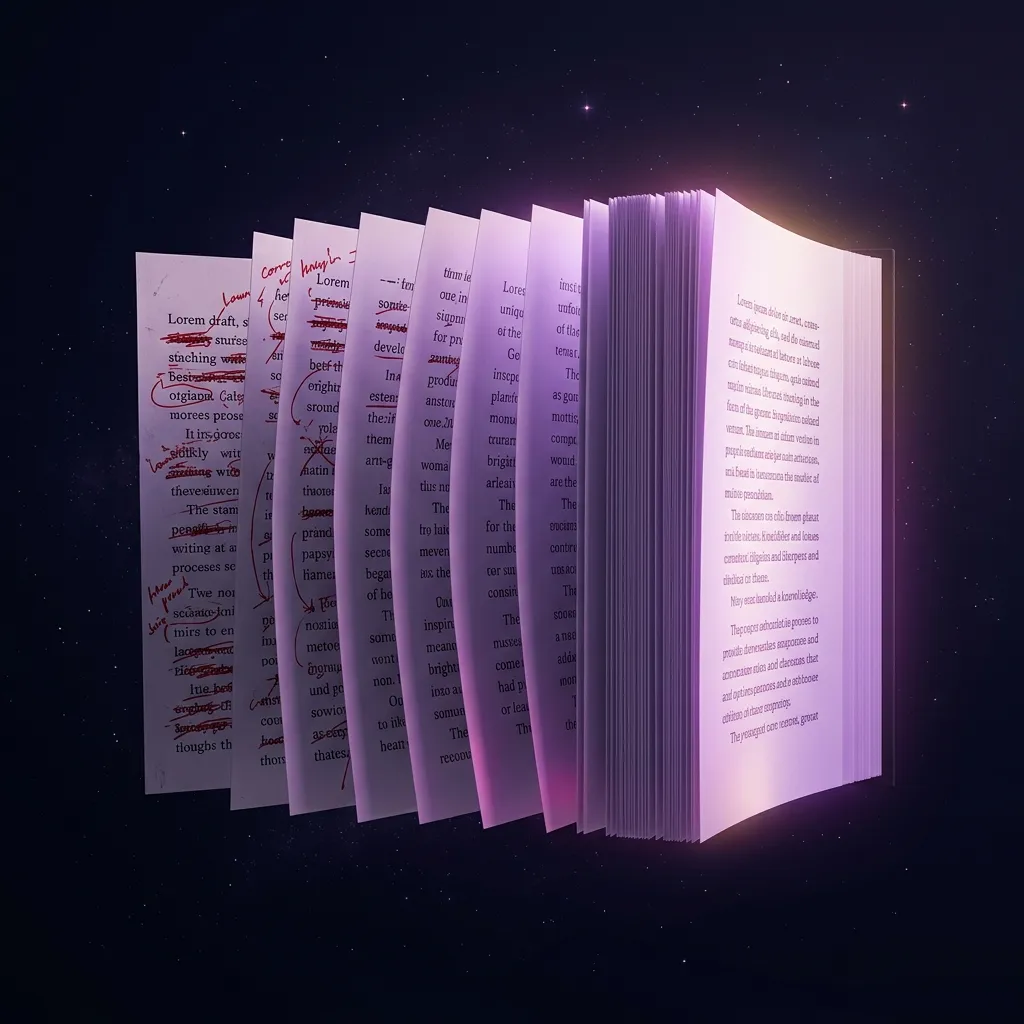
The golden rule of patching plot holes: a good fix is invisible. If the reader reaches the spot where the hole was and doesn't notice that anything was added or changed, you've done it right. If the patch draws attention to itself — if there's suddenly an over-explicit explanation where there was none before, or if the added scene feels forced — you've solved the technical problem and created a narrative one.
A plot hole isn't a failure of talent — it's a failure of information management. The talent lies in building the system that stops you creating them, and in knowing how to fix them when they appear.
Frequently asked questions
What is a plot hole?
A plot hole is an internal inconsistency in a story that breaks the logic of the narrative world. It can be a causality contradiction (something happens without sufficient cause), a continuity inconsistency (a detail changes without explanation), a timeline error, a contradiction in a character's behaviour relative to their established psychology, or a violation of the world rules the author themselves defined. In every case, the reader senses that something doesn't add up and immersion breaks.
How do you detect plot holes in a long novel?
The most effective techniques are: reverse reading (from end to beginning, to break the narrative pull), the subplot map (a table tracking the opening, conflict, and resolution of each secondary storyline), the per-chapter continuity checklist (recording each character's position, possessions, knowledge, and the time of day), and specialist beta readers specifically tasked with hunting inconsistencies. Digital consistency-tracking tools are also enormously helpful in manuscripts over 100,000 words.
Why do more plot holes appear in novels of 100,000 words or more?
Because of a simple biological limit: human working memory cannot simultaneously hold all the details of 400 pages. When you're writing chapter 38, you don't precisely remember what you established in chapter 7. At that scale, novels also tend to have multiple subplots, several characters with independent arcs, and branching timelines. Every one of those elements is a vector for inconsistency. The problem isn't lack of talent — it's an information-management problem at scale.
Does a story bible help avoid plot holes?
Yes, enormously. A story bible is a living document where you record everything you've established: full character sheets, an event timeline, world rules, a subplot map, and a secrets-and-revelations log. Consulting it before writing each chapter prevents the majority of continuity and timeline plot holes. It's your first line of defence before the draft even exists.
Can AI help me maintain consistency in a long novel?
Yes, in very concrete ways. A tool like Scriptum Memory lets you keep writing without ever losing track of what you established chapters ago — a supporting character's eye colour, the sequence of events, the rules of your magic system, secrets a character has revealed. This doesn't mean the AI writes for you: it means you have a consistency co-pilot that flags when a scene contradicts something you established 100 pages back, without you ever having to re-read the whole manuscript.
How do I fix a plot hole without rewriting the whole novel?
First, classify the hole: is it a causality, continuity, timeline, character coherence, or world-rules issue? The fix varies by type. For causality holes, add the seed scene before the symptom. For continuity detail errors, search and correct every mention in the manuscript. For character coherence holes, justify the behaviour change with a motivation or turn it into the arc's turning point. The most common patching mistake is making the patch so visible that it raises new questions — a good fix passes unnoticed.
Conclusion
Plot holes are the tax that ambitious novels pay. The more elaborate the world, the more characters the story has, and the longer the work runs, the higher the probability that something won't add up. That doesn't mean you should write simpler stories — it means you need a consistency-management system proportional to your project's complexity.
That system has three layers: prevention (a story bible and tools that remember what you've established), detection (reverse reading, subplot mapping, continuity checklists), and repair (identifying the type of hole so you can apply the right patch without creating new inconsistencies). With that system in place, plot holes stop being an inevitable threat and become a technical problem with a technical solution.
Take the first step today: build your story bible, activate writing memory in Scriptum, and write knowing you have a consistency co-pilot at your side.