A synopsis that hooks summarizes your novel by sparking the desire to read it, not by telling the whole thing. There are two types people confuse: the sales synopsis (the back-cover and Amazon one — short, with a hook, and no spoilers) and the synopsis for publishers (one or two pages that do reveal the ending). To self-publish you need the sales one: introduce the protagonist, their conflict, and what's at stake, and cut off right before telling how it ends.
You wrote seventy thousand words. Now you have to sell them in a hundred. The synopsis is, for many authors, harder than the entire novel, and for good reason: condensing a story without gutting it or boring anyone is an art of its own. But it's also what decides whether someone clicks "buy" or scrolls past. In this guide you'll see how to write a synopsis that hooks, with its exact anatomy and the mistakes that sink it. If you're still finishing the manuscript, first go through our guide on how to write a novel.
The two synopses everyone confuses
Before writing a word, get clear on which of the two you need, because they're opposite documents and mixing them up is mistake number one:
| Sales synopsis | Editorial synopsis | |
|---|---|---|
| For whom | The reader deciding whether to buy | A professional agent or editor |
| Where it goes | Back cover, Amazon, website | In the manuscript submission (query) |
| Length | 100-200 words | 1-2 pages |
| The ending? | Never reveals it | Tells everything, including the ending |
| Goal | Spark the desire to read | Prove you can close the story |
If you're going to self-publish on Amazon KDP, the one you need is the sales synopsis. We devote almost this whole guide to it. At the end we cover the other.
The anatomy of a sales synopsis that hooks
A good sales synopsis doesn't summarize: it selects. It has five pieces, and they all fit in one or two paragraphs:
- The hook. The first sentence. An irresistible situation or question. It's the only thing that guarantees they'll read the second line.
- The protagonist and their world. Who they are and what normal life is about to break, in a single brushstroke. No biographies.
- The inciting incident and the conflict. What happens to them, what they want, and what stands in the way. The engine of the story.
- What's at stake. What they lose if they fail. With no stakes, there's no tension and no reason to care about them.
- The cliffhanger. You cut off right before the resolution, leaving the question open. The reader buys to resolve it.
The hook: your first sentence is everything
On Amazon, the reader sees the first two or three lines before the "read more." If you don't grab them there, there's no second chance. A good hook poses immediate tension: an impossible desire, a threat, a question with no obvious answer. Compare:
"Marta is a 34-year-old librarian who lives in a small town, and one day she finds a rare book." (Information, zero tension.)
"The book Marta never should have opened has the exact day of her death written inside." (Question, the desire to know.)
The difference isn't the style: it's that the second version puts something at stake from the very first word.
How to write your synopsis step by step
A method that works, especially if condensing so many pages overwhelms you:
- 1. Reduce your novel to one sentence (the logline). "A [protagonist] must [goal] before [threat], but [obstacle]." If you can't, you don't yet have your own story clear.
- 2. Expand that sentence into a paragraph, adding the hook at the start and what's at stake at the end.
- 3. Cut the incidental. Subplots, secondary characters, names the reader doesn't need. In a synopsis, every proper noun costs.
- 4. Tune the tone to the genre. A horror synopsis should unsettle; a romance one, yearn. How you tell it already promises the book.
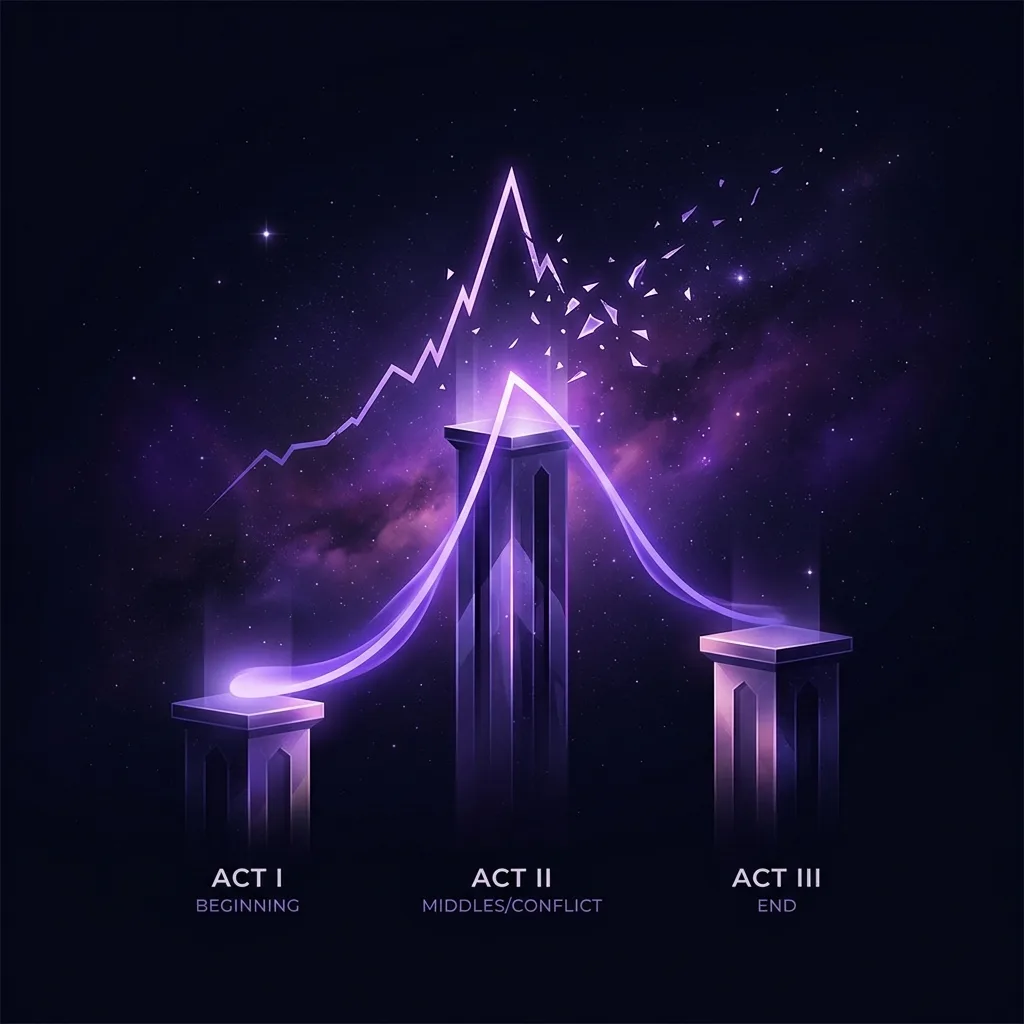
Reducing the novel to its skeleton is easier when you're clear on its structure: the inciting incident, the midpoint, and the crisis almost hand you the pillars of the synopsis.
Common mistakes that sink a synopsis
- Telling everything. In the sales synopsis, revealing the ending kills the reason to buy. Generate desire, not summaries.
- Listing facts with no emotion. "This happens, then this, then this." A synopsis isn't a table of contents: it's an emotional promise.
- Too many names. Three named characters in 150 words is already a crowd. Focus on the protagonist.
- Vagueness. "A story of love, adventure, and overcoming." That's no one's. The concrete hooks; the generic is forgotten.
- The wrong tone. If your novel is funny and the synopsis is solemn, you're promising a different book.
The synopsis for publishers and agents (the other one)
If instead of self-publishing you're after a traditional publisher, they'll ask for the other synopsis: one or two pages, in present tense and third person, that tell the whole plot, including the ending. There's no mystery to keep here: the agent needs to confirm the story holds from beginning to end and that you know how to resolve it. Be clear and orderly, follow the main thread without getting lost in subplots, and don't hide the resolution: hiding it is exactly what gets you rejected.

How to write your synopsis with Scriptum
Condensing your own novel is hard because you're too close to it. Aura AI, which knows your story and characters, helps you take the first step: it summarizes the plot, proposes several hooks, tunes the tone to the genre, and flags where there are too many names or subplots. You choose what to reveal and what to hold back; the AI takes away the blank page and gives you options to polish. And when the synopsis is ready, Scriptum's KDP export lets you take your description to Amazon without fighting the formatting.

Frequently asked questions
Does a synopsis include the ending of the novel?
It depends on the type. The sales synopsis (the back-cover and Amazon one) NEVER reveals the ending: its job is to spark the desire to read, so it cuts off just before the resolution. The synopsis for publishers or agents does tell the whole plot, including the ending, because its professional reader needs to confirm you know how to close the story. Confusing the two is the most common mistake.
How long should a synopsis be?
The sales synopsis for the back cover or Amazon runs around 100-200 words: short, intense, and with a hook. The synopsis for a publisher or agent usually takes one or two pages (between 500 and 1,000 words) and summarizes the whole plot. If you're not given a specific length, keep it short: almost always, less is more.
What's the difference between a synopsis and a summary?
A summary tells what happens neutrally; a synopsis is written to provoke a reaction. The sales synopsis selects, orders, and doses the information to create intrigue and desire, not to inform. That's why a good synopsis doesn't list facts: it poses a question that's only answered by reading the book.
How do I start a synopsis?
Start with the hook: a first sentence that poses an irresistible situation or question about the protagonist and their conflict. Forget introducing the world or the backstory; go straight to what's at stake. If your first line wouldn't make a stranger want to keep reading, rewrite it.
Can AI help me write the synopsis?
Yes, and it's one of the tasks where it helps most. AI can condense your novel, propose several hooks, tune the tone to the genre, and spot where there are too many names or subplots. It works best when it knows your story. The final decision (what to reveal and what to hold back) is still yours; AI speeds up the draft and gives you options to polish.
Conclusion: sell the question, not the answer
A synopsis that hooks doesn't tell your novel: it promises an experience. Introduce someone to care about, put something in front of them they could lose, and cut off right when the reader needs to know how it ends. That unanswered question is what turns a browser into a reader. Save the ending for the pages they already paid for.
If you want an AI that knows your story to help you find the hook and condense your novel into a synopsis that sells, that's exactly what Aura AI in Scriptum does. To review the theory, you can also check the entry on the blurb on Wikipedia.