A memorable villain is not built from evil, but from dimension: a motivation they believe is just, a coherent internal logic, a genuine ability to threaten the hero, and a touch of humanity that stops them from being reduced to a cardboard cut-out. The golden rule is that the villain is the hero of their own story. In this guide you'll see what sets a villain apart from an antagonist, the six ingredients that make one unforgettable, the classic types with examples, how to use them as a mirror of the protagonist, the mistakes that ruin them, and a template for designing your antagonist's character sheet.
Think about the stories that left a mark on you. Almost always, what you remember most sharply is not the hero — it's the villain. Hannibal Lecter, the Joker, Darth Vader, the Queen of Hearts, Voldemort, Anton Chigurh. A great antagonist is not the dark decoration of a plot; they are the engine that sets it in motion. Without someone (or something) standing in the protagonist's way, there is no conflict, and without conflict there is no novel. That is why creating a villain that truly measures up is one of the decisions that elevates a story most. If you're still shaping your project, keep our guide on how to write a novel close by as you build your antagonist.
What makes a villain memorable?
Let's start by dismantling the most widespread myth: what makes a villain memorable is not their wickedness. A character who does terrible things for no reason — just because they're evil — is forgotten the moment you close the book. What stays with you is something else entirely: that uncomfortable feeling of understanding them. Of thinking "they have a point" precisely when you least want to give it to them.
A memorable villain combines four qualities. A comprehensible motivation — you know why they act, even if you condemn them. A coherent internal logic — their actions are consistent with their beliefs; they are not erratic. A genuine threat — they have enough power that we genuinely fear for the hero. And a touch of humanity — something that connects them to us and keeps them from becoming a caricature. When these pieces are missing, you're left with a cardboard obstacle. When they're all there, you're left with a character the reader will never quite shake.
Villain and antagonist are not the same thing
It's worth sharpening the vocabulary here, because many people use these words as synonyms — and they're not. The antagonist is the force that opposes the protagonist's goal. It can be a person, yes, but also society, nature, an institution, time, or even the hero themselves locked in inner conflict. The villain is a specific type of antagonist: one with malicious or morally reprehensible intent.
Put simply: every villain is an antagonist, but not every antagonist is a villain. The father who stands in the way of his daughter's dream because he loves her and wants to protect her antagonizes without being evil. The sea that blocks a character's way home is an antagonist with no will of its own. Understanding this distinction frees you: your story doesn't need a dark lord in a cloak — it needs an opposition that forces your protagonist to transform. Sometimes that opposition will wear a villain's face; other times, it won't. If your plot calls for internal tension, remember that the best antagonist might live inside the hero themselves.
The golden rule: the villain is the hero of their own story
If there's only one idea you take from this article, let it be this: nobody sees themselves as the bad guy. Inside their own head, your villain is the protagonist of a story in which they are right. They believe they're doing what's correct, or at least what's necessary. The tyrant thinks they're imposing order; the fanatic believes they're saving souls; the avenger believes they're delivering justice; the manipulator believes everyone else is simply too weak to govern themselves.
This rule changes everything, because it forces you to write the villain from the inside out. Instead of asking yourself "what horrible thing do they do?", ask yourself "what do they want, and why are they convinced they deserve it?" Their desires usually grow from something deeply human — fear, pain, misguided love, a thirst for justice, survival, loyalty — pushed to an extreme where the moral line snaps. The reader doesn't have to agree. They only need to be able to follow the thread of the villain's logic and think, with a shiver, "if I had been through what they went through…"
The 6 ingredients of an unforgettable villain
Beyond the golden rule, there are six elements that separate a villain who is genuinely frightening from one who is merely embarrassing. You don't need all six in every antagonist, but the more of them you combine, the deeper they'll etch themselves into the reader's memory.
- A personal and concrete motivation. Not "they want to rule the world," but "they want to get back the daughter they lost, whatever the cost." Specificity convinces; generality bores.
- A wound or a backstory. Almost no one is born a monster — they are made into one. A betrayal, a loss, a humiliation, an injustice that explains what they became. Not to justify them, but to make them comprehensible.
- A moral code of their own. Even the worst villain has lines they won't cross. Those internal limits humanize them and make them unpredictable: they reveal that inside there are rules, not chaos.
- Intelligence and genuine capability. A villain is only as interesting as the threat they represent. If the hero defeats them without effort, the story deflates. Give them resources, a plan, and an edge.
- A connection to the protagonist. The best confrontations are personal. When villain and hero share a past, opposing values, or the same desire, the collision burns.
- A moment of humanity. A gesture of tenderness, a moment of doubt, an unexpected loyalty. That instant when the reader glimpses the person behind the monster is what makes them unforgettable.
Notice that none of these ingredients is "being very evil." Evil is the visible consequence; these six elements are the roots that sustain it. Work the roots and the tree grows on its own. And when you reveal all of this, do it through scenes, not explanations: apply the principle of show, don't tell to your villain as well. Don't tell us they're cruel; show us how they treat someone at their mercy.
Villain and antagonist types (with examples)
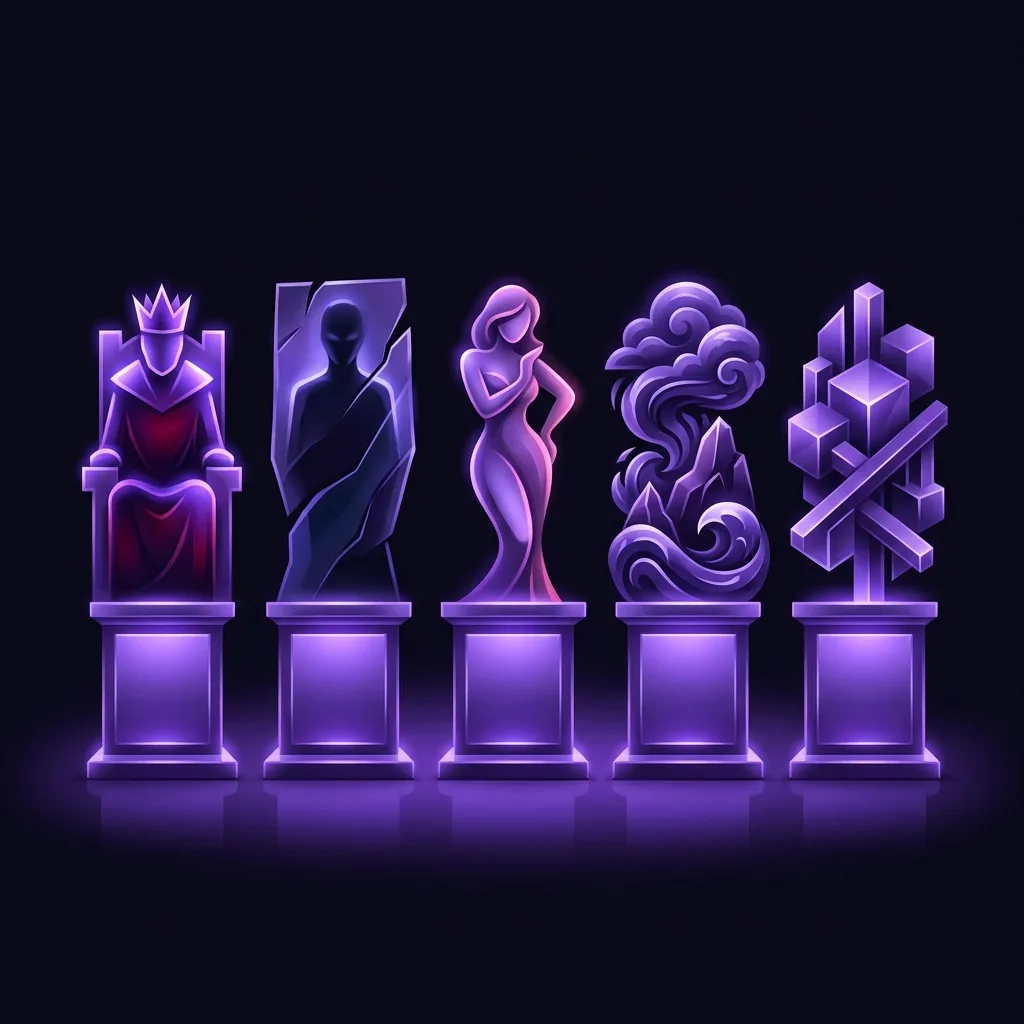
Archetypes are not moulds to copy, but starting points to bend to your own purposes. Knowing them helps you understand what function your antagonist serves in the plot, and helps you avoid accidentally repeating the same type. Here are the most common:
| Antagonist type | What defines them | Example |
|---|---|---|
| The dark mirror | Shares the hero's desire but has chosen the opposite path | Darth Vader vs. Luke |
| The tyrant / power | Imposes their order and crushes all dissent; believes they bring stability | Voldemort, Big Brother |
| The manipulative seducer | Wins not through force but through charm, deception, and psychological control | Hannibal Lecter, the Joker |
| The force of nature | No morality, no possible negotiation; an almost elemental threat | Anton Chigurh, the shark in Jaws |
| The system / society | No single face: the antagonist is an unjust structure | The dystopia of 1984, the castes of The Hunger Games |
| The internal antagonist | The obstacle is the protagonist themselves: their fear, addiction, or guilt | The inner conflict of any character-driven drama |
The most powerful approach is usually to cross archetypes: a tyrant who is also the hero's dark mirror, or a force of nature with a seductive edge. And nothing stops you from combining several antagonists in a single novel — a human villain with a face, and behind them, a system that made it all possible.
The villain as the protagonist's mirror
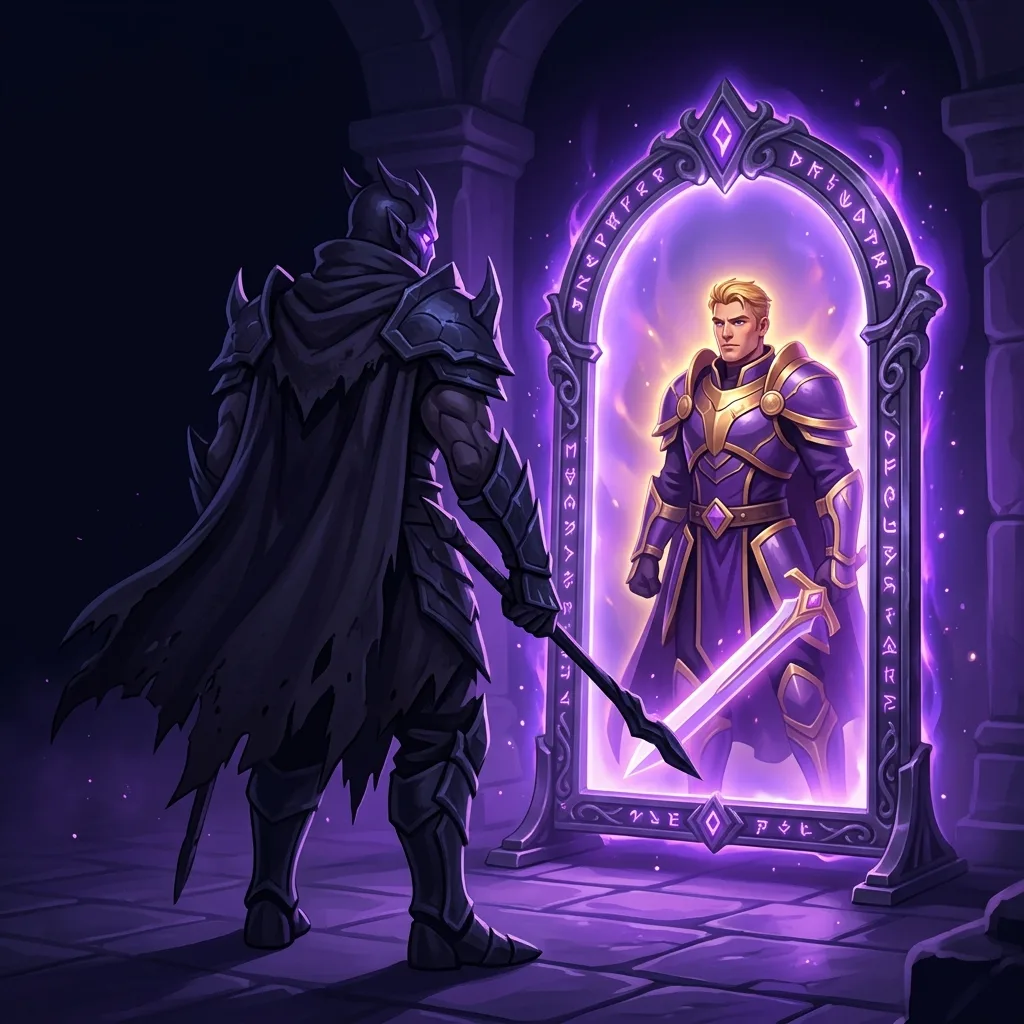
Here, probably, is the most powerful technique for creating a memorable antagonist: making them the protagonist's mirror. In narrative craft this is called a foil: a character who, by contrast, illuminates the hero. The best villain is not the protagonist's opposite in every way, but someone similar who made the opposite choice.
Think about it: hero and villain usually want the same thing — justice, power, love, security — but pursue it along morally opposed paths. The villain is what the protagonist could have become if they had given in to fear, pain, or temptation. That's why the final confrontation is not only physical: it's the confirmation of who the hero truly is. When the villain says "you and I are not so different," and the reader feels they have a point, you've touched the nerve of good fiction. This mirror relationship is also what makes characters unforgettable in the first place: they define themselves against each other.
How to give them depth: wound, code, and humanity
A villain's depth is built with three concrete tools you can apply to your antagonist today.
The wound. Ask yourself what happened to them to bring them to this point. It doesn't have to be a textbook trauma or a catalogued tragic childhood — that's also a cliché — just an experience that, followed to its logical conclusion, explains their current beliefs. The wound is not dumped all at once in an explanatory flashback: it is glimpsed in gestures, in silences, in what the villain avoids.
The code. Decide what your villain would never do. A killer who doesn't touch children, a tyrant who keeps their word, a manipulator who despises cowardice. Those internal rules do two things: they make the villain believable (real people have limits) and unpredictable (the reader senses there's a logic they can't quite master).
The humanity. Grant them at least one moment in which they behave like a human being and not like a threat: let them care for someone, let them hesitate, show humour, suffer a loss. And give them a voice of their own: a villain reveals themselves as much in how they speak as in what they do. Craft their manner of expression with the same attention you would bring to any piece of believable dialogue — the best antagonists have lines that stay with you.
Mistakes that ruin a villain
Knowing the traps is half the battle. These are the mistakes that turn a promising antagonist into an unintentional joke:
- Evil for evil's sake. The villain who does harm for no reason is mistake number one. Without a comprehensible why, there's no emotional threat — only noise.
- The explanatory monologue. That moment where the villain stops the action to explain their plan to the tied-up hero. It's a lazy way to reveal the plot, and on top of that it gives the protagonist time to escape. Reveal their mind through actions, not speeches.
- The incompetent villain. If they make absurd mistakes so the hero can win, the reader feels cheated. Your antagonist should lose because of something the hero does well, not through their own foolishness.
- The invincible villain. The opposite extreme: so powerful that their defeat can only be explained by a stroke of luck or a deus ex machina. The ending feels like a cheat.
- The one-note villain. Only cruel, only cold, only ambitious. Without contradictions or humanity, they're a caricature. Give them at least one crack.
- Forgetting them between scenes. A villain who vanishes for half the book loses their force. Even when they're off the page, their pressure must be felt: the reader should sense they're still moving their pieces.
Template: your villain's character sheet
Let's move from theory to practice. Before writing a single scene featuring your antagonist, answer these questions in writing. This is not bureaucracy: it's the scaffolding that guarantees a consistent villain chapter after chapter.
- Desire: what exactly do they want to achieve? (concrete, not abstract)
- Justification: why do they believe they have the right or the duty to achieve it?
- Wound: what past experience turned them into who they are?
- Method: how far are they willing to go, and what would they never do?
- Threat: what power, resources, or advantage do they have over the protagonist?
- Mirror: in what ways are they similar to the hero, and where did they choose opposite paths?
- Crack: what is their weakness, their contradiction, or their gesture of humanity?
- Voice: how do they speak? What line of theirs would sum up their worldview?
Keep this sheet alive as you write: your villain will evolve, and it's worth making sure their actions in chapter 20 remain consistent with the wounds established in chapter 2. This is where a proper working tool makes the difference. Scriptum's World Bible lets you save your antagonist's complete sheet — motivation, wound, code, voice — and keep it to hand without ever leaving the editor, so the writing AI respects their consistency scene after scene. Your villain stops being a fuzzy idea in your head and becomes a solid character you can lean on.
Frequently asked questions
What makes a villain memorable?
A memorable villain is defined not by evil, but by dimension: a comprehensible motivation (even if you don't share it), a coherent internal logic, a genuine ability to threaten the protagonist, and some touch of humanity that prevents them from being reduced to a cardboard cut-out. The more you understand why they do what they do — and the more convinced they are that they're right — the deeper they'll lodge in the reader's memory. Evil without cause is forgotten; a villain with reasons unsettles.
What is the difference between a villain and an antagonist?
They are not synonyms. The antagonist is the force that opposes the protagonist's goal: it can be a person, but also society, nature, an institution, or even the hero themselves. The villain is a specific type of antagonist: one with malicious or morally reprehensible intent. Every villain is an antagonist, but not every antagonist is a villain. A sporting rival or a well-intentioned parent can antagonize without being evil.
What motivation should a good villain have?
One they consider just. The golden rule of antagonism is that the villain is the hero of their own story: they believe they're doing the right thing, or at least the necessary thing. Their desires usually grow from something deeply human — fear, pain, misguided love, a thirst for justice, survival — pushed to an extreme. Avoid motivation that amounts to wanting to be evil for its own sake: the reader needs to follow the villain's internal logic, even if they repudiate it.
Does the villain have to be evil?
Not necessarily. What your story needs is an antagonist who generates conflict and forces the protagonist to change. Many great novels have no evil villain, only an antagonist with their own reasons: an overprotective mentor, an unjust system, an illness, time itself. If your story calls for a classic villain, give them depth; if not, remember that opposition is the essential ingredient, not wickedness.
How do I stop my villain from being a cliché?
Give them a concrete, personal motivation instead of a generic hunger for power. Give them a wound or a backstory that explains what they became. Give them a moral code of their own, however twisted: things they would never do. Grant them at least one moment of humanity — tenderness, doubt, generosity — that breaks the mould. And avoid the monologue where they explain their plan to the tied-up hero: reveal their mind through actions, not speeches.
Can a villain be the protagonist of a novel?
Yes. This is what is called an antihero or a morally grey protagonist, and they can sustain an entire novel if the reader understands their motives and finds something to connect with: a comprehensible goal, a vulnerability, a wit to admire. When the villain carries the weight of the story, their inner world must be developed even further: we need to walk alongside them, even if we disapprove of what they do.
How powerful should a villain be?
Powerful enough to pose a real threat to the protagonist, but not so powerful that their defeat seems impossible or arbitrary. The practical rule: the villain should be strong enough that the hero has to change — not just try harder — in order to defeat them. If the antagonist is weak, there's no tension; if they're invincible for no reason, the ending feels like a cheat. The best villain is calibrated to match the transformation your protagonist needs to undergo.
Conclusion: a great villain elevates the whole novel
Creating a memorable villain is not about inventing the most spectacular cruelty — it's about building a human being who made choices you would not make, and giving them reasons so solid that the reader trembles when they understand them. Give them a motivation they believe is just, a wound that explains them, a code that limits them, the power to pose a real threat, and a crack of humanity that makes them unforgettable. Make them the protagonist's mirror and you'll find that your hero shines brighter in the process. Remember the golden rule and everything else falls into place: your villain is the hero of their own story. Design them with that respect and you will have taken one of the steps that elevates a novel most. Now go and put them to the test on the page: your protagonist will thank you for it.