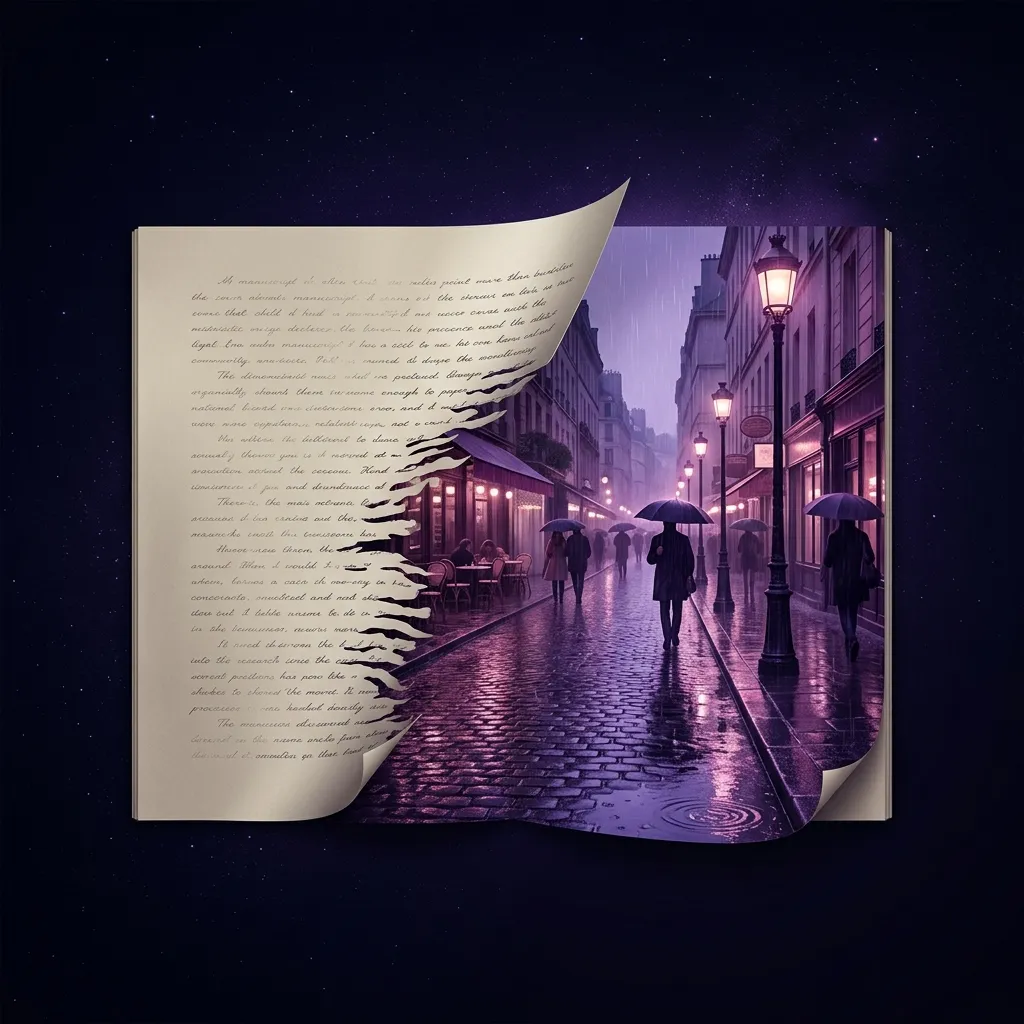
To write descriptions that don't bore, stop piling up facts and start selecting. Choose one or two concrete, revealing details instead of a full inventory, appeal to several senses (not just sight), and filter them through the character's eyes. And above all, describe in motion: weave the description into the action instead of stopping the story to drop a paragraph of scenery. In this guide you'll find the method, the examples, and the mistakes that make readers skip your paragraphs.
There's an uncomfortable truth about description: it's the part of a novel that readers skip the most. We've all done it: a long paragraph describing a castle shows up, the eyes jump to the next line of dialogue, and the story carries on. And here's the problem, because description isn't filler between scenes: it's what makes the reader SEE. Done well, it pulls them inside the page; done badly, it pushes them out. The difference between the two isn't writing more prettily, it's knowing what to describe, how much, and when. This is part of the craft we cover in the complete guide to writing a novel; here we zero in on one specific technique that almost nobody masters.
Why descriptions bore
Descriptions bore for one very specific reason: the writer confuses describing with inventorying. They believe their job is to tell the reader everything in the room — the table, the chairs, the curtains, the colour of the walls, the painting on the wall — like someone filling out a moving checklist. But the reader doesn't want a floor plan of the set; they want a feeling, an image that stays burned into them.
When you describe everything, you actually describe nothing: the reader doesn't know where to look and their brain switches off. Description tires when it's complete, neutral, and detached from the story. It hooks when it's selective, charged with intention, and stitched into the action. Everything that follows comes from that one idea: to describe is to choose.
What makes a description good
An effective description rests on three pillars. They aren't decorative rules: they're the criteria you use to decide what to keep and what to cut.
- Concreteness. The concrete can be seen; the abstract is forgotten. "An old car" says nothing; "a rusted Fiat with one door a different colour" is seen instantly. Swap generic adjectives (pretty, big, old) for specific nouns and details.
- Selection. Don't describe everything: describe what matters. One precise detail, well placed, is worth more than a paragraph of inventory. The reader fills in the rest with their imagination, and they'll do it better than you could write it.
- Economy. Description competes with pace. Every sentence the reader spends looking at the scenery is a sentence that doesn't move the story forward, so charge only what's fair. Little and good.
If you internalise these three pillars, you're already halfway there. The other half is knowing which senses to appeal to and how to fold the description into the scene.
Use the five senses (not just sight)
The most common mistake after the inventory is describing everything with the eyes. The visual matters, but it's only one sense out of five. Anyone's most intense memories are tied to smells and sounds, not images, and fiction works the same way: when you appeal to hearing, smell, touch, or taste, the scene stops being a photograph and becomes a place.
- Hearing. The buzz of a fluorescent tube, the thick silence of an empty house, the creak of a wooden floor.
- Smell. It's the most evocative sense and the most neglected. The bleach smell of a hospital places the reader before any description of the walls.
- Touch. The cold of marble, the roughness of a blanket, the sweat of a shirt stuck to a back.
- Taste. Use it when it adds something: the metallic taste of fear, a coffee that's too bitter, the aftertaste of salt on the lips.
Don't cram all five senses into every scene — that would be another form of inventory. Pick one or two that aren't the obvious ones and let them do the work. A single well-chosen smell transports the reader further than three sentences of visual description.

The telling detail: less is more
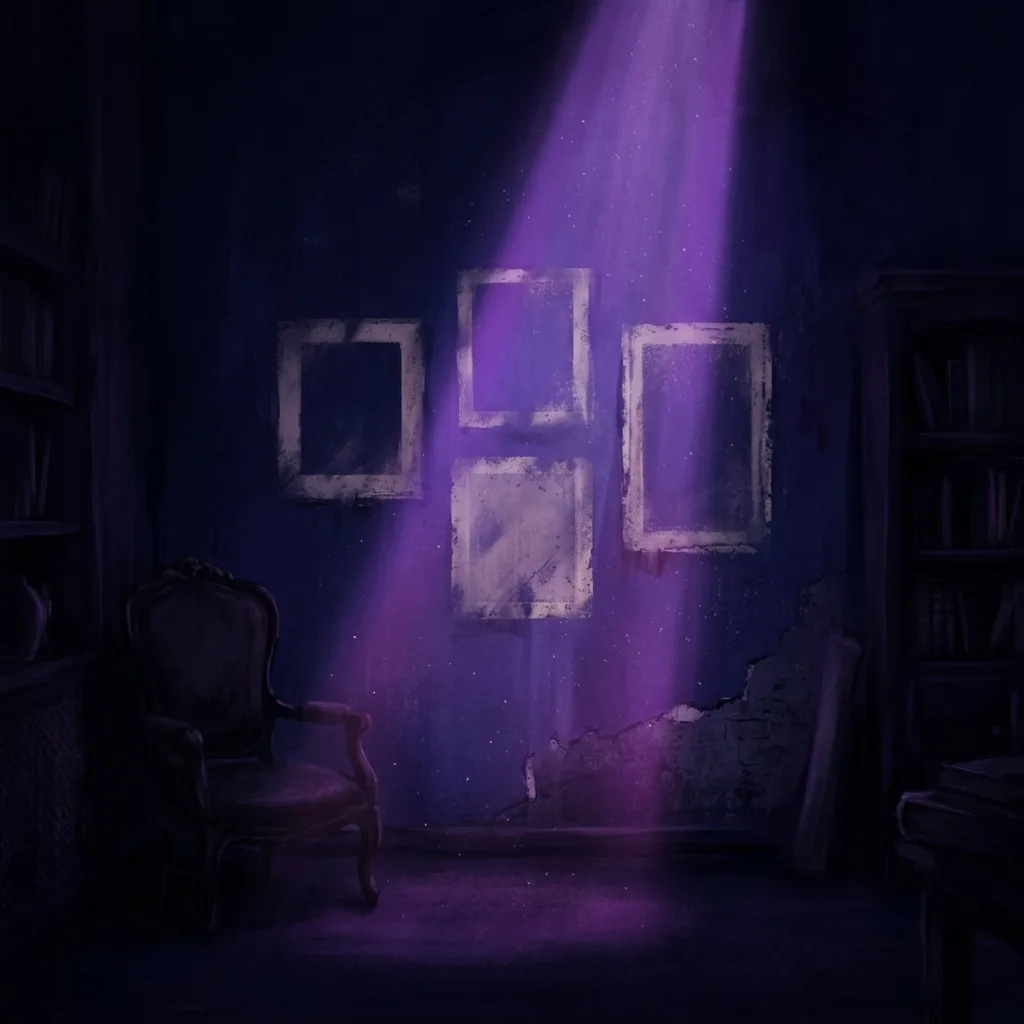
Here's the secret that separates the amateurs from the professionals: the telling detail (or revealing detail). It's the concrete detail that, on its own, suggests far more than it says. Instead of describing an entire house to tell us someone has left, you mention the brighter rectangular marks on the wall, where paintings used to hang. You don't say "they moved out": you show it, and the reader infers it.
The telling detail works because it trusts the reader. You give them a precise clue and let their imagination rebuild the whole. That's exactly the mechanic of "show, don't tell": you don't explain the conclusion, you offer the evidence so the reader reaches it on their own. A well-chosen detail doesn't just describe: it characterises, hints at a backstory, and charges the scene with emotion, all at once.
To find it, ask yourself one question before every description: "what detail, if it were the only one I could give, would say it all?" That's the one that stays. The rest goes.
Describing isn't showing the reader what you see; it's giving them the exact detail so they imagine it themselves. The description people remember isn't the most complete one, but the most precise.
How to describe characters
The big mistake when describing characters is the ID-card portrait: height, age, hair colour, and eye colour lined up in a row, usually the first time the character appears. That doesn't create an image, it creates a passport entry. Worse still: the reader has already pictured the person their own way, and your list of traits clashes with their image instead of building it.
Instead, pick one defining trait that suggests character: a scar nobody explains, bitten nails, a way of looking out of the corner of the eye, a smile that never reaches the eyes, an expensive suit with frayed cuffs. A single well-chosen detail draws the whole person because it hints at a story behind it. And spread the description across the scene rather than dumping it all at once: let the reader get to know the character the way they get to know real people, little by little. If you want to go deeper, here's the guide to how to create unforgettable characters.
An extra trick: describe the character in action, not standing still. "She pushed the hair off her face with the back of a grease-stained hand" says more about who she is — and what she's doing — than three sentences about her physical appearance.
How to describe places and settings
The same goes for settings: you don't need the floor plan, you need the atmosphere. A place isn't described by what it contains, but by what it stirs. The same room reads differently if the person walking in is in love, terrified, or bored, and that's the key: the setting should convey a tone, not a catalogue of furniture.
Choose the details that create a feeling — the smell of damp, the light slanting in, the dust hanging in the air — and discard everything else. And make the setting work for the story: let it bring tension, information, or mood. A room that's too tidy can be scarier than one in ruins. When you build entire worlds — fantasy, science fiction, sagas — this selection matters even more; we develop it in the worldbuilding guide, where the challenge is showing a world without halting the story to explain it.
Describing in motion
This is the technique that ties it all together and the one that most sets a professional manuscript apart: never stop the story to describe. Clumsy description works like a pause — the action freezes, the scenery paragraph arrives, and then the action resumes. Good description goes inside the movement: the character walks in, acts, and the room reveals itself to us through what they touch, dodge, or look at.
This links up with point of view: if you describe through a character's eyes, the description stops being neutral and fills with subjectivity. A police officer and a child don't notice the same things when they walk into the same room, and what each of them notices tells us something about both. Filtering the description through the eyes of whoever is watching kills two birds with one stone: it paints the setting and characterises the person in the same sentence.
In practice: instead of a paragraph of description followed by a paragraph of action, interleave them. A brushstroke of scenery, an action, a sensory detail, a gesture. The reader sees the place without realising you're describing it to them, and that's exactly what we're after.
Mistakes that kill the pace
Description failures repeat themselves over and over. If you recognise these, you already know what to look for when you revise:
- The descriptive dump (info-dump). Halting the story to describe everything at once: the character's appearance, the castle's history, the rules of the world. Ration it: information drip-fed, inside the action.
- The ID-card portrait. The character's physical form the moment they appear. We've already seen it: one revealing trait, spread out.
- The avalanche of adjectives. Three adjectives together don't describe better, they describe worse. A concrete noun beats a string of qualifiers.
- Describing the obvious. If your character is in a kitchen, you don't need to mention there's a fridge. Describe only what surprises, matters, or characterises.
- The neutral description. A setting told without anyone's eyes is a postcard. Always filter through a point of view so that every detail means something.
Most of these problems aren't visible when you write the first draft: you catch them in revision, reading aloud and asking yourself at every paragraph "would the reader skip this?" If the answer is yes, cut it or fold it into the action.
How Scriptum helps you with descriptions
Describing well is one of the hardest skills to automate, because it depends on judgement. But there's a mechanical part you can speed up. In Scriptum you can ask Aura AI to suggest sensory details for a scene, to flag where a descriptive dump or an ID-card portrait has crept in, and to offer more concrete versions of a flat paragraph so you can pick and rewrite in your own voice. The AI doesn't describe your world for you: it points out where the description sags and gives you raw material so you decide. You bring the judgement; it saves you the bottlenecks.
Frequently asked questions
How do you write a good description in a novel?
A good description selects rather than accumulates. Choose one or two concrete, revealing details instead of an inventory, appeal to several senses (not just sight), and filter them through the character's eyes. And above all, weave it into the action instead of stopping the story to drop a paragraph of scenery. The golden rule: concreteness and economy — one precise detail is worth more than ten adjectives.
How do you describe a character without being boring?
Forget the ID-card portrait (height, hair colour, and eye colour in a row). Instead, pick one trait that defines and suggests character: a scar, a way of moving, a smile that never reaches the eyes. Spread the description across the scene rather than dumping it all at once, and let the reader fill in the rest. One well-chosen detail draws the whole person.
How do you describe a place or setting in a novel?
Describe the place by what it stirs, not by its floor plan. Choose the details that create a feeling (the smell of damp, the buzz of a fluorescent tube, the cold of marble) and show them through what the character notices, because the same room is described differently depending on who walks in. The setting must work for the story: tone, tension, or information, never decoration for its own sake.
How much description should a novel have?
Just enough for the reader to see without getting bored, and there's no fixed number: it depends on the genre and the pace. In a thriller, descriptions are short; in literary fiction they can breathe more. The key isn't quantity, it's integration: if the description halts the action and the reader skips it, it's surplus. Describe little and well, right when the reader needs to see, then return to the story.
What is the telling or revealing detail?
It's the concrete detail that, on its own, suggests far more than it says. Instead of describing an entire house, you mention the marks where a painting used to hang on the wall and the reader infers a move or a loss. It works because it trusts the reader: it gives a precise clue and lets their imagination fill in the rest. It's the heart of showing rather than telling.
How do you avoid the info-dump in descriptions?
The information dump appears when you halt the story to describe everything at once. The solution is to ration: spread the description in small doses, inside the action, right when it's relevant. If the reader needs to know what a room looks like, describe it when the character walks in and reacts, not in a separate paragraph. Information drip-fed, always in service of the scene.
Conclusion: to describe is to choose
If you take just one idea from this guide, let it be this: describing isn't accumulating, it's choosing. The writer who improves their descriptions doesn't learn to write more, they learn to cut; to keep the detail that says it all and let go of the rest. Concreteness instead of adjectives, several senses instead of just sight, the telling detail instead of the inventory, and description stitched into the action instead of paragraphs the reader skips.
The next time you write a scene, don't ask yourself "what's here?", ask "what does the reader need to see, and what detail will say it all?" That question turns filler into literature. Start applying it today in Scriptum.